
Sports Chiropractor in Frisco TX | Sports Injury & Performance Care

Sports Chiropractic for Injury, Recovery & Performance
Athletes place very different demands on their bodies than the average patient. Running, lifting, throwing, cutting, jumping, rotating, and repeated training can expose problems with joint motion, spinal mechanics, mobility, and movement patterns that may not be obvious during everyday activity.
At Venn Chiropractic and Wellness Center, Dr. Jason Venn provides sports chiropractic care for youth athletes, competitive athletes, active adults, and recreational athletes throughout Frisco, TX. With more than 25 years of clinical experience, he evaluates both the area where an athlete feels symptoms and the mechanical factors that may be contributing to the problem.
Our approach combines precise Gonstead chiropractic with evaluation of spinal and extremity joint function, movement, mobility, and nerve-related symptoms. When a disc injury or nerve irritation is involved, spinal decompression therapy may also become an important part of the recovery plan.
The goal isn’t simply to get an athlete out of pain. It’s to understand what is limiting movement or recovery, address the factors we can identify, and help the athlete return to activity with better function.
How Sports Chiropractic Care Supports Athletes
Sports chiropractic looks beyond the location of pain to evaluate how the spine, extremity joints, and surrounding musculoskeletal system are functioning during movement.
Athletic activity places repeated forces through the body. If motion is restricted in the spine, hip, shoulder, knee, ankle, or another joint, an athlete may begin changing the way they move to continue training or competing. Those compensations can shift stress to other areas and may contribute to recurring pain, stiffness, or reduced mobility.
For this reason, Dr. Venn evaluates more than the painful area. Depending on the athlete and the problem, care may consider spinal and extremity joint motion, mobility, movement patterns, muscle balance, and neurological findings.
Sports chiropractic care may be used to:
- Improve restricted joint motion and mobility
- Address mechanical problems that may be affecting movement
- Identify compensations that may be contributing to recurring symptoms
- Support recovery and a progressive return to activity
For an athlete, the question isn’t only “What hurts?” It’s also “What may be contributing to the way this area is being loaded, stressed, or moved?”
Sports Injuries and Symptoms We Evaluate
Sports-related problems don’t always begin with one obvious injury. Some happen suddenly during training or competition, while others develop gradually from repetitive loading, restricted movement, previous injuries, or changes in how the body is moving.
Athletes commonly come to our office with problems involving the spine and extremities, including:
- Lower back pain during or after training
- Neck pain and stiffness, including problems following contact or sudden movement
- Headaches associated with neck tension, strain, repetitive activity, or certain sports-related injuries
- Shoulder pain with lifting, throwing, pressing, or overhead activity
- Hip pain or restricted hip mobility
- Knee pain during running, squatting, jumping, or changing direction
- Ankle and foot problems affecting movement or activity
- Sciatica or radiating leg pain
- Arm pain, numbness, tingling, or weakness that may involve nerve irritation
- Recurring pain or stiffness that improves temporarily but returns with activity
- Reduced mobility or range of motion that affects training or performance
The location of an athlete’s symptoms is an important part of the evaluation, but it doesn’t always tell us the entire story. A shoulder problem may involve the shoulder itself, for example, while arm symptoms may sometimes be related to nerve irritation originating in the neck. Hip or leg symptoms can also have several possible sources.
The purpose of the evaluation is to determine which joints, tissues, nerves, or movement patterns may be involved before deciding what type of care makes sense.
How We Evaluate Sports Injuries
A sports injury evaluation should look beyond the painful area. Dr. Venn begins by learning how the injury occurred, what movements reproduce the symptoms, how the problem affects training or competition, and whether previous injuries may be influencing the way the athlete moves.
Depending on the athlete’s symptoms and examination findings, the evaluation may include:
- Spinal and extremity joint evaluation to identify restricted or abnormal joint motion
- Range-of-motion testing to identify limitations and movements that reproduce symptoms
- Orthopedic testing to help evaluate the joints, muscles, ligaments, and other structures that may be involved
- Neurological testing when pain, numbness, tingling, weakness, or other symptoms suggest possible nerve involvement
- Postural and movement assessment to identify mechanical patterns that may be placing additional stress on an injured area
- Muscle strength and balance assessment when weakness or compensation may be affecting movement
- Digital X-rays when clinically appropriate to evaluate spinal structure, degeneration, previous injury, or other findings that may influence care
The findings from the evaluation help Dr. Venn determine whether the problem appears to involve the spine, an extremity joint, soft tissue, a disc or nerve, or a combination of factors.
Those findings then guide the treatment plan rather than automatically using the same treatment for every athlete or every injury.
Why We Use Gonstead Chiropractic With Athletes
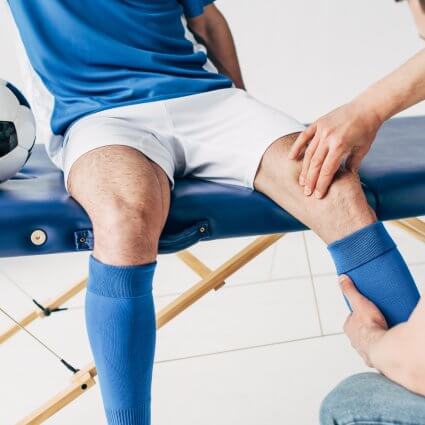
Athletes repeatedly load their bodies through running, lifting, jumping, throwing, rotating, and rapid changes of direction. When spinal or extremity joint motion becomes restricted, those demands can become harder to tolerate and may affect how an athlete moves.
At Venn Chiropractic and Wellness Center, Dr. Venn uses the Gonstead System because of its emphasis on detailed analysis and highly specific adjustments. Rather than routinely adjusting multiple areas of the spine, the goal is to identify the particular joints that require attention and make a precise correction based on the examination findings.
For athletes, Gonstead chiropractic may help:
- Restore healthier motion to restricted spinal joints
- Address specific joint dysfunction identified during the examination
- Support more comfortable movement during recovery and return to activity
Precision is especially important for athletes because the goal isn’t simply to create movement in the spine. It’s to determine where abnormal or restricted motion is present and address that area specifically.
Spinal Decompression for Athletes With Disc and Nerve-Related Injuries
For athletes dealing with a bulging or herniated disc, disc-related back or neck pain, sciatica, or radiating nerve symptoms, reducing pain is only part of the goal. The injured disc itself may also need an environment that better supports recovery.
At Venn Chiropractic and Wellness Center, spinal decompression uses computer-controlled decompression and relaxation cycles to create carefully changing pressures within the affected spinal segments. While there is a traction component, the treatment is designed to do much more than simply stretch the spine.
These controlled pressure changes create a mechanical pumping effect within the disc, encouraging fluid movement and nutrient exchange and supporting the biological environment needed for disc health and repair.
At the same time, decompression is designed to create negative pressure within the disc. This may reduce mechanical stress associated with a bulging or herniated disc and decrease pressure or irritation affecting nearby nerve roots.
For athletes, spinal decompression may be particularly valuable when symptoms involve:
- Herniated or bulging discs
- Disc-related lower back or neck pain
- Sciatica or radiating leg pain
- Arm pain associated with cervical nerve irritation
- Numbness or tingling related to nerve compression
- Recurring disc-related symptoms aggravated by training or competition
When an athlete has both disc involvement and spinal joint dysfunction, Dr. Venn may use spinal decompression together with precise Gonstead chiropractic care. The two treatments have different roles: Gonstead addresses the joint mechanics identified during the examination, while decompression addresses the disc-related component. Not every sports injury requires decompression; whether it is appropriate depends on the athlete’s symptoms, examination findings, and the structures involved.
What I’ve Learned From Treating Athletes for More Than 25 Years
One of the biggest things I’ve learned from treating athletes for more than 25 years is that where an athlete feels pain isn’t always where the entire problem begins. I’ve seen athletes repeatedly treat the area that hurts without asking why that area keeps getting overloaded. Sometimes the painful area is the primary problem. Other times, restricted joint motion, an old injury, altered mechanics, or compensation somewhere else in the body is contributing to the stress.
I understand this from both sides of the treatment table. I’ve spent years training and competing in Brazilian Jiu-Jitsu, eventually earning my black belt, and I’ve lifted weights and stayed active throughout my adult life. I’ve also spent years coaching my sons and other young athletes. When something hurts, athletes usually don’t want to be told to stop doing everything they love—they want to understand what happened, what they can safely do, and how they can work toward getting back.
I’ve also learned that athletes are not all built the same and shouldn’t be treated the same. A teenage athlete going through a growth spurt, a competitive adult, a weekend runner, and a longtime lifter place very different demands on their bodies. Their history, sport, training load, previous injuries, goals, and examination findings all matter.
My goal isn’t to make an athlete dependent on treatment. It’s to identify what I can help with, be honest about what I can’t, and help each athlete return to activity with better function and a clearer understanding of their body.
Frequently Asked Questions — Sports Chiropractor in Frisco, TX
What does a sports chiropractor do?
A sports chiropractor evaluates musculoskeletal injuries, joint restrictions, movement problems, and nerve-related symptoms that may affect training, recovery, or athletic performance. Dr. Venn evaluates both the painful area and other factors that may be contributing to the problem, then recommends care based on the athlete’s examination findings, sport, activity level, and goals.
Do you work with youth and high school athletes?
Yes. Dr. Venn works with youth and high school athletes as well as adults. Younger athletes are evaluated with their age, stage of development, sport, training demands, injury history, and examination findings in mind. Recommendations are individualized rather than using the same approach for a growing athlete and an adult.
What types of sports injuries do you evaluate?
We evaluate athletes with problems involving the spine and extremities, including back and neck pain, shoulder and knee problems, restricted joint motion, recurring pain or stiffness, sciatica, and arm or leg symptoms that may involve nerve irritation. Because similar symptoms can have different causes, the examination is used to determine which structures may be involved before recommending care.
Do you treat athletes who aren’t injured?
Yes. Athletes also visit our office for restricted mobility, recurring stiffness, movement limitations, or problems that become noticeable during training even when there has not been a specific injury. Dr. Venn evaluates what may be contributing to the problem and whether chiropractic care or another conservative approach is appropriate.
Do you adjust areas other than the spine?
Yes. Depending on the examination findings, Dr. Venn may evaluate and treat extremity joints such as the shoulders, elbows, wrists, hips, knees, ankles, and feet in addition to the spine. Treatment is based on the specific joint dysfunction identified during the examination rather than automatically adjusting every area. Learn more about extremity adjusting
Can sports chiropractic help with sciatica or nerve symptoms?
It may help in some cases, depending on what is causing the symptoms. Sciatica, numbness, tingling, or radiating pain may be associated with disc problems, joint dysfunction, or nerve irritation. Dr. Venn evaluates the source of the symptoms first and may recommend chiropractic care, spinal decompression, or another approach based on the findings.
Can spinal decompression help athletes with disc injuries?
Spinal decompression may be an important part of care when a bulging or herniated disc, disc-related pain, or nerve irritation is contributing to an athlete’s symptoms. The treatment uses controlled decompression and relaxation cycles to create changing pressures within the affected spinal segments, supporting fluid and nutrient exchange while reducing mechanical stress associated with the injured disc and nearby nerve structures. Whether decompression is appropriate depends on the athlete’s examination findings and individual condition.
Do I need X-rays before sports chiropractic care?
Not every athlete needs X-rays. Dr. Venn may recommend digital X-rays when they are clinically appropriate based on the athlete’s history, examination findings, type of injury, or other factors that warrant a closer look at spinal or joint structure. If imaging is not necessary, it is not performed simply as a routine requirement for care.
How do I know when a sports injury should be evaluated?
Consider an evaluation when pain keeps returning, symptoms interfere with training or competition, mobility or strength is decreasing, numbness or tingling develops, or an injury isn’t progressing as expected. Sudden severe symptoms, significant trauma, rapidly increasing weakness or numbness, or other concerning neurological symptoms may require prompt medical evaluation.
Schedule a Sports Injury Evaluation
Whether you’re dealing with a new injury, recurring pain, restricted mobility, or symptoms that are interfering with training or competition, the first step is understanding what’s contributing to the problem.
Dr. Jason Venn has more than 25 years of experience evaluating and treating athletes in Frisco, from youth and high school athletes to active adults and competitive athletes. Your evaluation will focus on identifying the joints, tissues, nerves, or movement problems that may be involved and determining what type of care is appropriate for your condition.
Contact us today to schedule your sports injury evaluation.
Reviewed by Dr. Jason Venn, DC
Doctor of Chiropractic | 25+ Years of Clinical Experience
This page has been reviewed by Dr. Jason Venn for clinical accuracy and reflects his experience evaluating and treating sports injuries, musculoskeletal conditions, and spine and extremity problems in athletes.
Venn Chiropractic and Wellness Center | Frisco, TX
