
Spinal Adjustments in Frisco
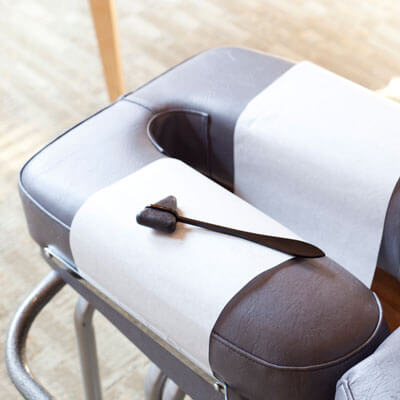
A chiropractic adjustment should never be performed simply because an area of the spine feels tight or because a patient has pain in a particular location.
The first question should be:
Does this spinal joint actually need to be adjusted?
For more than 25 years, Dr. Jason Venn has approached spinal adjustments with an emphasis on precision, careful examination, and correcting only the areas that demonstrate findings indicating they need attention.
Using the Gonstead System, Dr. Venn evaluates how individual spinal joints are moving, how the surrounding tissues are responding, and how the overall mechanics of the spine may be contributing to a patient’s symptoms. When clinically appropriate, X-rays and specialized instrumentation may also provide additional information before an adjustment is recommended.
This matters because not every stiff or painful area should automatically be adjusted. Sometimes the place that hurts is compensating for a problem somewhere else. A precise examination helps identify which spinal segment is contributing to the dysfunction, the direction in which it should be corrected, and just as importantly, which areas should be left alone.
A spinal adjustment is a controlled, specifically directed force applied to a joint that is not moving or functioning as it should. The goal is to restore healthier motion and mechanics while reducing unnecessary stress on the surrounding joints, muscles, discs, and nerves.
Patients often seek spinal adjustments for problems such as neck pain, lower back pain, headaches, sciatica, posture-related strain, and other conditions involving restricted or abnormal spinal motion. The appropriate care, however, is always determined by the individual examination rather than by the diagnosis alone.
What Can a Spinal Adjustment Actually Do?
A spinal adjustment is designed to improve the way a specific joint in the spine moves and functions. When a spinal joint becomes restricted, the surrounding muscles and tissues may compensate, which can contribute to stiffness, discomfort, altered movement, and increased mechanical stress.
Depending on the patient’s condition and examination findings, a precise spinal adjustment may help:
- Restore joint motion: Improve movement in spinal segments that have become restricted.
- Reduce mechanical stress: Improve the way forces are distributed through the spine so surrounding joints and tissues do not have to compensate as much.
- Improve mobility: Help patients move more comfortably and regain motion that has been limited by joint restriction or stiffness.
- Reduce pain and stiffness: Improving joint mechanics may decrease irritation in the surrounding muscles, joints, and other tissues.
- Support better spinal function: Restoring healthier motion can help the different regions of the spine work together more efficiently.
The goal is not simply to make the spine “pop.” The sound that sometimes occurs during an adjustment is not what determines whether an adjustment was successful. What matters is whether the appropriate joint was identified and a precise correction was made to improve its function.
Signs Your Spine May Not Be Moving Properly
Restricted or abnormal motion in the spine does not always feel the same from one person to another. Some patients experience obvious pain, while others first notice stiffness, limited movement, or recurring discomfort during everyday activities.
Symptoms that may warrant a closer evaluation include:
- Recurring neck or lower back pain
- Stiffness or reduced range of motion
- Difficulty turning or bending comfortably
- Pain or stiffness after prolonged sitting
- Discomfort that repeatedly returns in the same area
- Feeling restricted during exercise or everyday movement
- Headaches associated with neck tension or restricted cervical motion
- Pain that travels into an arm or leg
- Numbness, tingling, or other nerve-related symptoms
These symptoms do not automatically mean that you need a spinal adjustment. They can have many different causes, which is why Dr. Venn first evaluates how the spine is moving and whether joint dysfunction is actually contributing to the problem.
Conditions We Commonly Evaluate
Spinal joint dysfunction can occur alongside many different musculoskeletal and nerve-related conditions. An adjustment may be appropriate when the examination shows that restricted or abnormal spinal motion is contributing to the problem.
Conditions we commonly evaluate include:
Having one of these conditions does not automatically mean that a spinal adjustment is appropriate. The purpose of the examination is to determine whether spinal joint dysfunction is part of the problem and, if so, which areas require correction.
What Does a Spinal Adjustment Feel Like?
One of the most common concerns patients have before their first chiropractic adjustment is whether it will hurt or involve forceful twisting of the spine.
A precise spinal adjustment is a quick, controlled movement directed at a specific joint and in a specific direction. With the Gonstead approach, Dr. Venn does not simply twist or manipulate large areas of the spine. The examination determines which joint needs attention and how the correction should be delivered.
You may feel pressure or movement during the adjustment, and you may hear a popping sound. That sound is simply gas being released within the joint—it is not the goal of the adjustment and does not determine whether the correction was successful.
The amount of force and the adjusting approach can also be modified based on factors such as your age, condition, spinal health, and examination findings. Dr. Venn’s goal is to use the appropriate amount of force needed to make a precise correction—not more than necessary.
Many patients who arrive nervous about being adjusted are surprised by how quick and specific the adjustment actually is.
How Does Dr. Venn Know Where to Adjust?
Finding the area that hurts is not the same as finding the spinal joint that needs to be adjusted.
Before making an adjustment, Dr. Venn looks for multiple findings that help identify where spinal motion and mechanics are abnormal. Depending on the patient, this may include examining movement, feeling how individual joints move, evaluating surrounding tissues, using specialized instrumentation, and reviewing X-rays when clinically appropriate.
Rather than adjusting every area that feels tight or uncomfortable, these findings are considered together to determine whether a specific spinal segment needs correction.
This is an important part of the Gonstead System: the examination determines the adjustment—not simply the location of the patient’s pain.
Once the problem area has been identified, Dr. Venn can determine the appropriate contact point, direction, and adjusting approach for that individual patient.
Why Patients Trust Dr. Venn for Spinal Adjustments
When it comes to chiropractic adjusting, experience matters—but so does the method used to determine when, where, and how an adjustment should be performed.
Dr. Jason Venn has more than 25 years of experience caring for patients with spinal, disc, joint, and nerve-related problems. His approach is centered on the Gonstead System, which emphasizes detailed analysis and highly specific adjustments rather than routinely manipulating multiple areas of the spine.
Patients choose Dr. Venn because his approach includes:
- More than 25 years of clinical experience
- Advanced training and experience with the Gonstead System
- Specific adjustments based on examination findings
- X-rays when clinically appropriate to better understand spinal structure and mechanics
- Adjusting techniques selected for the individual patient and condition
- Ongoing evaluation to determine how the spine is responding to care
The goal is not to perform as many adjustments as possible. It is to make the right adjustment, in the right place, for the right reason.
What to Expect Before Your First Adjustment
Your first visit is about determining what is causing your symptoms and whether a spinal adjustment is appropriate for you.
1. Consultation and Health History
Dr. Venn begins by discussing what you’re experiencing, when your symptoms started, previous injuries or health concerns, and what you hope to accomplish with care.
2. Physical and Spinal Examination
Next, Dr. Venn evaluates your spine, movement, and areas of concern. The examination is designed to identify abnormal joint motion and other findings that may help explain your symptoms.
3. X-Rays When Clinically Appropriate
Not every patient requires X-rays. When they are indicated, imaging can provide additional information about spinal structure, alignment, previous injuries, degeneration, and other factors that may influence how an adjustment should be performed.
4. Explanation of Findings
Before recommending care, Dr. Venn explains what he found, what those findings may mean, and whether chiropractic adjustments are appropriate for your condition.
5. Your Adjustment
When an adjustment is appropriate, it is directed specifically to the area identified during the examination. The technique, contact point, direction, and amount of force are selected based on your individual findings.
6. Monitoring Your Progress
As care continues, Dr. Venn evaluates changes in your symptoms, movement, and spinal function to determine whether the treatment approach should be continued or modified.
The goal is for you to understand why an adjustment is being recommended and what Dr. Venn is trying to accomplish with it—not simply to receive an adjustment without understanding the reason behind it.
Frequently Asked Questions About Spinal Adjustments
How many chiropractic adjustments will I need?
There is no predetermined number of adjustments that is right for every patient. Recommendations depend on what Dr. Venn finds during the examination, the nature and duration of the problem, your treatment goals, and how your condition progresses. Your care is regularly evaluated so recommendations can be adjusted as needed rather than continuing on a fixed schedule regardless of progress.
Do I need an X-ray before getting a spinal adjustment?
Not every patient needs X-rays before being adjusted. Dr. Venn recommends imaging when it is clinically appropriate based on factors such as your symptoms, health history, examination findings, age, previous injuries, or other concerns. When X-rays are indicated, they can provide information about spinal structure that helps guide safe and precise care.
Is it normal to hear a popping sound during an adjustment?
Yes. A popping or cracking sound can occur when gas is released from within a joint during an adjustment. The sound itself is not the purpose of the adjustment, and an adjustment does not have to make a sound to be effective. What matters is the specific correction being made to the joint.
Can you be adjusted if you have a herniated or bulging disc?
Possibly, but having a disc injury changes how care should be approached. Dr. Venn evaluates the location and severity of the disc problem, your symptoms, neurological findings, and other relevant factors before determining whether an adjustment is appropriate and which technique should be used. Some patients with disc-related problems may also benefit from spinal decompression when clinically appropriate.
Can spinal adjustments and spinal decompression be used together?
Yes, when both are appropriate for the patient’s condition. The two treatments serve different purposes: a spinal adjustment is used to address specific joint motion and mechanics, while spinal decompression is designed to reduce mechanical pressure on affected spinal discs and nerve structures. Dr. Venn determines whether one or both approaches are appropriate based on the examination findings.
Do I need chiropractic adjustments if I am not in pain?
Not necessarily. The absence of pain alone does not determine whether an adjustment is needed. Some people have restricted spinal motion without significant discomfort, while others may have pain that is not caused by a problem requiring an adjustment. Dr. Venn bases the recommendation on examination findings rather than symptoms alone.
Ready to Find Out if Spinal Adjustments Are Right for You?
If you’re dealing with recurring pain, stiffness, limited movement, or symptoms that keep returning, the first step isn’t simply getting adjusted—it’s understanding what’s causing the problem.
At Venn Chiropractic and Wellness Center, Dr. Jason Venn begins with a thorough evaluation to determine whether spinal joint dysfunction is contributing to your symptoms and whether a chiropractic adjustment is appropriate for you.
If an adjustment is recommended, your care will be based on your individual examination findings, with an emphasis on making the right correction in the right place for the right reason.
Schedule an appointment with Dr. Venn today to find out what’s contributing to your symptoms and what your next step should be.
CONTACT US »
