
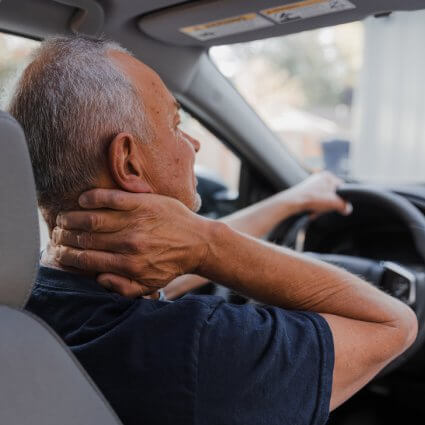
Auto Accident Chiropractor in Frisco TX
A car accident can injure the neck, back, spinal joints, discs, muscles, ligaments, and nerves—even when the collision does not appear severe.
Some injuries cause immediate pain. Others become noticeable hours or days later as stiffness, headaches, reduced movement, back pain, numbness, tingling, or other symptoms develop.
At Venn Chiropractic and Wellness Center, Dr. Jason Venn has more than 25 years of experience evaluating and treating patients after motor vehicle accidents. His first priority is determining what was actually injured and whether chiropractic care is appropriate for that injury.
That distinction matters because post-accident symptoms can come from very different problems. Neck pain after a collision may involve whiplash, joint injury, muscle or ligament injury, or a disc problem. Pain traveling into an arm or leg may indicate nerve involvement. Headaches or dizziness after an accident may require additional consideration before treatment is recommended.
Dr. Venn does not assume that every patient who has been in an accident simply needs an adjustment. The examination is used to determine what appears to have been injured, whether additional imaging or medical evaluation is appropriate, and what type of care may be appropriate for the individual patient.
The goal is to treat the injury that is actually present—not simply the symptom that appeared after the crash.
Common Symptoms After a Car Accident
Symptoms after a collision can vary depending on the direction of impact, body position, use of seat restraints, previous injuries, and the structures affected during the accident.
Some symptoms begin immediately. Others may become more noticeable during the hours or days following the collision.
Common post-accident symptoms include:
- Neck pain or stiffness
- Reduced ability to turn or move the neck
- Headaches that begin or worsen after the collision
- Upper back or shoulder pain
- Lower back pain
- Pain traveling into an arm or leg
- Numbness or tingling in an arm, hand, leg, or foot
- Muscle tightness or guarding
- Difficulty sitting, standing, driving, or sleeping comfortably
- Dizziness, fogginess, or other symptoms following the impact
A delayed onset of pain does not necessarily mean the injury occurred later. Symptoms may become more apparent after the initial stress of the collision has passed or as injured tissues become painful and movement becomes more restricted.
However, not every symptom after a car accident should automatically be treated as a chiropractic problem. Significant dizziness, confusion, loss of consciousness, worsening neurological symptoms, severe headache, progressive weakness, or other concerning symptoms may require medical evaluation before chiropractic treatment is considered.
Dr. Venn evaluates the patient’s symptom pattern together with the physical examination to determine whether the problem appears musculoskeletal, whether nerves may be involved, and whether additional evaluation is appropriate.

Common Injuries After a Car Accident
A motor vehicle collision can affect several structures at the same time. The type of injury depends on the direction and force of the impact, the patient’s position during the collision, previous spinal conditions, and other factors.
Dr. Venn’s examination is designed to determine which structures appear to be involved rather than assuming that every post-accident patient has the same injury.
Whiplash and Neck Injuries
Whiplash occurs when rapid movement of the head and neck places stress on the joints, muscles, ligaments, and other tissues of the cervical spine.
Patients may experience neck pain, stiffness, reduced range of motion, headaches, upper-back discomfort, or pain extending toward the shoulder or arm.
Because several different structures can produce similar symptoms after a collision, Dr. Venn evaluates the cervical spine to determine what findings are actually present before recommending treatment.
Disc Injuries
The force of a collision can injure a spinal disc or aggravate a disc problem that existed before the accident.
When a herniated or bulging disc affects or irritates a nearby nerve, symptoms may include radiating arm or leg pain, numbness, tingling, or weakness. A lumbar disc problem may also contribute to sciatica.
Importantly, finding disc degeneration or another abnormality on imaging does not automatically prove that it was caused by the accident or that it is responsible for the patient’s current symptoms. Dr. Venn considers the imaging findings together with the patient’s history and examination.
Lower Back and Sacroiliac Joint Injuries
Car accidents can also place substantial stress on the lumbar spine, pelvis, and sacroiliac joints.
Patients may develop lower back pain, pain near one side of the pelvis, stiffness, or difficulty sitting, standing, bending, walking, or changing positions comfortably.
When pain is concentrated around the pelvis or buttock, Dr. Venn also considers whether the sacroiliac joint may be contributing rather than automatically assuming the pain is coming from the lumbar spine.
Nerve-Related Symptoms
Pain traveling into an arm or leg, numbness, tingling, burning, or weakness may indicate that a nerve has been irritated or affected.
The location and pattern of these symptoms can provide important clues about where the problem may be originating. For example, arm symptoms may sometimes originate from the cervical spine, while leg symptoms may involve the lumbar spine or sciatic nerve.
New or progressive weakness, significant neurological changes, or symptoms that do not fit a typical musculoskeletal pattern deserve particular attention and may require additional medical evaluation.
How Dr. Venn Evaluates Auto Accident Injuries
An auto accident examination begins with understanding what happened during the collision and how the patient’s symptoms developed afterward.
Dr. Venn considers factors such as the direction of impact, where the patient was seated, body position at the time of impact, when symptoms began, whether symptoms are changing, previous injuries, and any neurological symptoms that developed after the accident.
The physical examination may include evaluation of:
- Spinal and joint movement
- Areas of pain or tenderness
- Cervical and lumbar range of motion
- Neurological findings when appropriate
- Strength and sensation
- Patterns of radiating pain, numbness, or tingling
- Findings that may indicate disc or nerve involvement
- Specific spinal mechanics relevant to chiropractic care
The purpose of the examination is not simply to confirm that the patient is hurting. It is to determine what structures may have been injured and whether those findings are appropriate for chiropractic treatment.
When Are X-Rays Used After a Car Accident?
Not every auto accident patient automatically needs X-rays.
When clinically appropriate, Dr. Venn may use in-office digital X-rays to evaluate the spine after a collision. X-rays can provide information about vertebral positioning, spinal alignment, bone structure, degenerative changes, previous injuries, fractures, and other structural findings relevant to the examination.
X-rays do not directly show spinal discs, nerves, muscles, or ligaments the way other forms of imaging may. If the patient’s symptoms or examination findings suggest that another type of imaging or medical evaluation is needed, Dr. Venn may recommend that instead.
An abnormal finding on an X-ray also does not automatically mean the accident caused it.
Pre-existing degeneration or structural changes can be present before a collision without causing symptoms. Dr. Venn considers the patient’s history, examination, imaging, and symptom pattern together when determining what appears relevant to the current injury.
Why Gonstead Analysis Matters After an Accident
When chiropractic care is appropriate, Dr. Venn uses the Gonstead System of chiropractic to help identify the specific spinal areas that demonstrate findings indicating they may require treatment.
This is particularly important after trauma because Dr. Venn does not want to routinely adjust multiple areas simply because a patient was involved in an accident.
The goal is specificity: identify the problem first, then determine what should—and should not—be treated.
Treatment recommendations are based on the individual patient’s findings and may change as the patient progresses.
How Are Auto Accident Injuries Treated?
Treatment after a car accident should depend on the injury identified during the examination rather than simply the fact that an accident occurred.
When chiropractic care is appropriate, Dr. Venn develops an individualized treatment plan based on the structures involved, the severity of the patient’s symptoms, neurological findings, previous injuries, and how the patient responds to care.
Depending on the individual case, treatment may include:
- Specific Gonstead chiropractic adjustments
- Spinal decompression when disc involvement is present and the patient is an appropriate candidate
- Spinal rehabilitation to improve movement, strength, stability, and function
- Soft-tissue or massage therapy when appropriate
- Home exercises or movement recommendations
Not every patient needs every form of treatment.
A patient with primarily joint and mechanical restrictions may require a different approach than someone with a disc injury, radiating pain, or significant muscular involvement.
When Is Spinal Decompression Used After an Accident?
A collision can injure a spinal disc or aggravate a disc problem that was already present. When a disc problem is contributing to neck pain, lower back pain, sciatica, or radiating symptoms, spinal decompression may be considered as part of the treatment plan.
The purpose of decompression is to create controlled changes in spinal loading that may reduce pressure and mechanical stress affecting an injured or symptomatic disc.
Dr. Venn does not recommend decompression simply because someone has been in a car accident. The patient’s symptoms, examination findings, imaging when appropriate, and overall condition are considered first.
Some accident patients are excellent candidates for decompression. Others do not need it at all.
How Is Recovery Measured?
Feeling less pain is important, but it is not the only way Dr. Venn evaluates progress after an auto accident.
Depending on the patient’s original findings, progress may also include:
- Improved neck or back range of motion
- Reduced radiating pain, numbness, or tingling
- Improved ability to sit, stand, drive, work, or sleep comfortably
- Reduced stiffness or muscular guarding
- Improved tolerance for normal movement and activity
- Improvement in examination findings associated with the injury
- Progress toward returning to normal daily activities
Dr. Venn compares the patient’s progress with the problems identified during the initial examination rather than relying only on how the patient feels on a particular day.
The goal is measurable improvement in the problems associated with the injury—not simply temporary symptom relief.
If a patient is not progressing as expected, the condition can be reassessed to determine whether the treatment approach should change or whether additional imaging, medical evaluation, or referral may be appropriate.
Personal Injury Cases and Documentation
Venn Chiropractic and Wellness Center has experience caring for patients who have been injured in motor vehicle accidents, including patients whose treatment is associated with a personal injury claim.
When appropriate, Dr. Venn’s records document the patient’s history, reported symptoms, examination findings, treatment provided, and response to care over time.
Depending on the individual situation, coverage for accident-related care may involve automobile insurance benefits such as PIP or MedPay, health insurance, or a third-party liability claim.
Insurance coverage and claim requirements vary, so patients should verify the benefits and requirements that apply to their individual situation.
Our office can assist with chiropractic records and care-related documentation when appropriate, but we do not provide legal advice or determine liability for an accident.
When Should You Seek Medical Care After a Car Accident?
Some post-accident injuries may be appropriate for chiropractic evaluation and treatment. Others require emergency or additional medical evaluation.
After a collision, urgent medical evaluation may be appropriate for symptoms such as:
- Loss of consciousness or significant confusion
- Severe or rapidly worsening headache
- Repeated vomiting
- Significant dizziness or difficulty with balance
- New or progressive weakness in an arm or leg
- Difficulty speaking, walking, or coordinating movement
- New bowel or bladder dysfunction
- Numbness in the groin or saddle area
- Chest pain or difficulty breathing
- Significant abdominal pain
- Suspected fracture or severe pain following major trauma
- Other rapidly worsening neurological symptoms
This is not a complete list. If an injury appears potentially serious or symptoms suggest a problem outside the scope of chiropractic care, appropriate medical evaluation should come first.
Dr. Venn’s role is not to make every post-accident symptom fit a chiropractic diagnosis. If the history or examination indicates that another type of evaluation, imaging, or treatment is more appropriate, referral may be recommended.
What If My Symptoms Didn’t Start Until Later?
Not every accident-related symptom begins immediately.
Some patients initially feel relatively normal and notice neck pain, back pain, headaches, stiffness, or other symptoms later that day or during the following days.
A delayed onset does not by itself determine how serious an injury is. What matters is the nature of the symptoms, how they are changing, and what the examination reveals.
If new symptoms develop after a collision—particularly neurological symptoms, significant headaches, dizziness, or progressively worsening pain—they should not simply be ignored because the patient felt fine immediately after the accident.
Frequently Asked Questions
Should I see a chiropractor after a minor car accident?
The amount of visible vehicle damage does not necessarily tell you whether you have a musculoskeletal injury.
If you develop neck pain, back pain, stiffness, headaches, restricted movement, or other musculoskeletal symptoms after a collision, an evaluation can help determine what may have been injured and whether chiropractic care is appropriate.
Symptoms suggesting a potentially serious injury should receive appropriate medical evaluation first.
How soon after a car accident should I get evaluated?
There is no single timeline that applies to every accident.
Some injuries cause immediate symptoms, while others become more noticeable during the hours or days following the collision. If you develop pain, restricted movement, neurological symptoms, or other concerns after an accident, the important issue is determining what is causing those symptoms rather than assuming they will simply resolve on their own.
Can chiropractic care help with whiplash?
Chiropractic care may be appropriate for some patients with whiplash, depending on the structures injured and the findings of the examination.
Dr. Venn evaluates the cervical spine and surrounding musculoskeletal structures before determining whether chiropractic treatment is appropriate and what areas should be treated.
Why did my neck or back pain start a day or two after the accident?
Not every post-accident symptom begins immediately.
Some patients notice pain, stiffness, headaches, or restricted movement later that day or during the following days. The timing of the symptoms alone does not determine the type or severity of the injury, which is why the patient’s history and examination findings are important.
How do I know if a car accident injured a spinal disc?
Disc-related problems can sometimes cause localized neck or back pain, but symptoms may also include radiating arm or leg pain, numbness, tingling, or weakness.
Symptoms alone cannot always determine whether a disc has been injured. Dr. Venn considers the patient’s history, examination findings, neurological findings, and imaging when appropriate to determine whether a disc problem may be contributing.
Can spinal decompression help after a car accident?
It may be appropriate when a disc problem is contributing to the patient’s symptoms and the patient is a suitable candidate.
Dr. Venn does not recommend spinal decompression simply because someone was involved in a collision. The decision is based on the patient’s symptoms, examination findings, imaging when appropriate, and the nature of the disc problem.
Do I need X-rays after a car accident?
Not necessarily.
Dr. Venn may recommend digital X-rays when they are clinically appropriate for evaluating spinal structure, vertebral positioning, previous injuries, degeneration, or other structural findings relevant to the examination.
X-rays do not directly show discs, nerves, muscles, or ligaments, and some patients may require another type of imaging or medical evaluation instead.
Can a car accident cause numbness or tingling?
Yes. Numbness or tingling after a collision can sometimes occur when a spinal or peripheral nerve has been irritated or affected.
The location and pattern of the symptoms are important because they can help determine where the problem may be originating. Persistent, worsening, or progressive numbness and tingling, particularly when accompanied by weakness or other neurological changes, should be evaluated.
What if I already had neck or back problems before the accident?
A previous spinal condition does not automatically mean that new symptoms after an accident are unrelated to the collision.
At the same time, an existing degenerative or structural finding should not automatically be blamed on the accident simply because it appears on an X-ray.
Dr. Venn considers the patient’s previous symptoms and injuries, current examination findings, imaging when appropriate, and how the patient’s condition changed following the collision when evaluating the current problem.
Does Venn Chiropractic work with personal injury cases?
Yes. Venn Chiropractic and Wellness Center has experience caring for patients whose chiropractic treatment is associated with a personal injury claim.
Our records can document the patient’s reported history, examination findings, treatment, and response to care. Insurance benefits and claim requirements vary, and our office does not provide legal advice or determine liability.
Why Experience Matters After an Auto Accident
Auto accident cases can be more complicated than treating an isolated episode of neck or back pain. A collision may affect joints, discs, muscles, ligaments, and nerves at the same time, while pre-existing conditions can make it more difficult to determine which findings are actually relevant to the patient’s current symptoms.
Dr. Jason Venn has more than 25 years of clinical experience and has evaluated and treated many patients following motor vehicle accidents.
That experience is particularly valuable when a patient has several problems occurring at once—for example, neck pain with headaches, a disc injury with radiating symptoms, or lower back pain combined with sacroiliac joint involvement.
The goal is not to apply the same treatment plan to every accident patient. It is to determine what appears to have been injured, what findings are clinically relevant, and what type of care is appropriate for that individual patient.
Schedule an Auto Accident Evaluation in Frisco
If you have developed neck pain, back pain, headaches, stiffness, radiating pain, numbness, tingling, or another musculoskeletal problem after a car accident, Dr. Venn can evaluate your condition and determine whether chiropractic care may have an appropriate role in your recovery.
At Venn Chiropractic and Wellness Center, treatment recommendations are based on the patient’s history, examination findings, and individual injury rather than simply the fact that a collision occurred.
Contact our Frisco chiropractic office to schedule an auto accident evaluation with Dr. Venn.
Reviewed by Dr. Jason Venn, DC
Doctor of Chiropractic | 25+ Years of Clinical Experience
This page has been reviewed by Dr. Jason Venn for clinical accuracy and reflects his experience evaluating and treating patients with auto accident injuries, including whiplash, neck and back injuries, and disc-related conditions.
Venn Chiropractic and Wellness Center | Frisco, TX
