
Spinal Rehab in Frisco
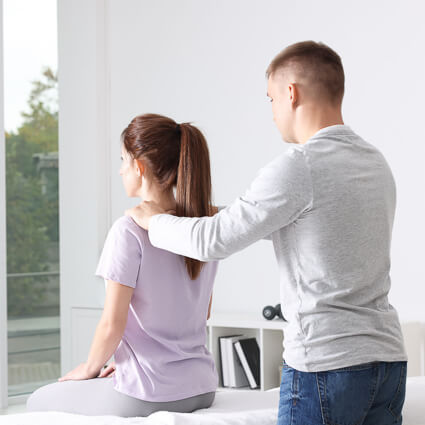
Back or neck pain can improve and still leave you feeling like you’re not completely back to normal. You may feel better at rest but notice that lifting, exercising, sitting for long periods, returning to sports, or even normal daily activities bring the problem back.
Spinal rehabilitation is designed to improve the strength, stability, movement, and physical capacity needed to return to those activities with greater confidence.
At Venn Chiropractic and Wellness Center in Frisco, Dr. Jason Venn incorporates spinal rehabilitation when exercise and movement-based care can complement treatment and help a patient improve function. Rather than giving every patient the same exercises, rehabilitation is based on the condition being treated, examination findings, current abilities, and the activities the patient wants to return to.
What Spinal Rehab Actually Means
Spinal rehabilitation is a structured, progressive approach to improving how your body moves, controls movement, and tolerates physical activity. Depending on the patient’s condition, rehabilitation may focus on mobility, strength, stability, coordination, endurance, or movement patterns that are relevant to their symptoms and goals.
Unlike passive treatment, rehabilitation requires the patient to actively participate in the recovery process. Exercises and activities are progressed over time based on how the patient responds, with the goal of improving function and increasing the body’s ability to handle the demands of everyday life, work, exercise, or sports.
Why Do Back or Neck Problems Keep Coming Back?
Recurring pain doesn’t necessarily mean that something is continually being damaged. Symptoms can return when the demands placed on the body exceed what it is currently prepared to tolerate.
For some patients, limited mobility, reduced strength or endurance, changes in movement patterns, previous injury, prolonged sitting, repetitive activity, or returning to exercise too quickly may contribute to recurring flare-ups. The factors involved are different for every patient.
That’s one reason rehabilitation can be valuable even after pain begins to improve. The goal isn’t simply to exercise until something stops hurting. It’s to progressively rebuild the movement and physical capacity needed for the activities that matter to you.
Common Reasons People Look into Spinal Rehab
Spinal rehabilitation may be considered when pain, stiffness, weakness, reduced mobility, or difficulty returning to normal activities persists after an injury or develops with a recurring spinal or musculoskeletal problem.
Common reasons patients may benefit from spinal rehab include:
- Recurring lower back pain or stiffness, especially when certain movements or activities repeatedly trigger symptoms
- Neck pain or stiffness that interferes with movement, work, exercise, or daily activities
- Disc-related conditions, including herniated or bulging discs, when progressive movement and strengthening are appropriate
- Sciatica or radiating leg symptoms when weakness, reduced tolerance for activity, or movement limitations need to be addressed
- Difficulty returning to sports or exercise after a back, neck, or musculoskeletal injury
- Reduced strength, stability, mobility, or endurance after a period of pain or decreased activity
- Recurring symptoms when sitting, standing, lifting, bending, walking, or performing other everyday activities
- Feeling better after treatment but not yet confident returning to normal activity
Where Decompression and Chiropractic Care Can Fit in
Rehabilitation can be an important part of care, but it doesn’t necessarily have to be used by itself. Depending on the condition and examination findings, Dr. Venn may combine rehabilitation with chiropractic care or spinal decompression when those treatments are appropriate.
Gonstead chiropractic may be used when joint or spinal dysfunction appears relevant to the patient’s symptoms or movement. Dr. Venn uses examination findings and, when appropriate, imaging to determine which areas should be addressed rather than routinely adjusting the same areas on every patient.
Spinal decompression may be considered for selected patients with disc and nerve-related conditions. Its role is different from rehabilitation: decompression provides a controlled form of spinal distraction intended to temporarily reduce mechanical loading on certain spinal structures, while rehabilitation focuses on progressively improving movement, strength, stability, and physical capacity.
These approaches don’t have to be used together for every patient. Some patients may primarily need rehabilitation, while others may benefit from combining rehab with chiropractic care, spinal decompression, or both. The appropriate approach depends on the condition being treated and how the patient responds over time.
What Your Plan Might Include
A spinal rehabilitation program should be based on what you’re currently able to do, what movements or activities are difficult, and what you want to get back to doing. Dr. Venn considers your condition, symptoms, examination findings, current function, and everyday physical demands when determining which exercises and activities are appropriate.
Depending on your needs, spinal rehab may include:
- Core and trunk stabilization exercises to improve control and support during movement
- Mobility exercises when restricted movement is relevant to your condition
- Movement retraining for activities such as bending, lifting, squatting, reaching, or other movements that are difficult or repeatedly aggravate symptoms
- Progressive strengthening to gradually increase your ability to tolerate everyday, work, recreational, or athletic demands
- Balance and coordination exercises when appropriate for the patient’s condition and functional goals
- Posture and activity recommendations for sitting, working, lifting, exercising, and other activities that may influence symptoms
- A gradual return to exercise or sports when the goal is to resume higher-level physical activity
Your program can change as you improve. Exercises that are appropriate early in care may be progressed as your strength, movement, and tolerance increase.
The goal isn’t simply to complete a list of exercises. It’s to progressively build the physical abilities you need for the activities that matter to you.
This Is Not About Pushing Through Pain
It’s common to become cautious about movement after an injury or repeated flare-ups. But spinal rehabilitation isn’t about forcing painful movements or simply exercising harder.
Exercises are selected based on your current abilities and progressed according to how you respond. Some discomfort with movement doesn’t necessarily mean that damage is occurring, but significant or worsening symptoms may indicate that an exercise, activity, or progression needs to be modified.
The goal is gradual progression—not pushing through symptoms regardless of how your body responds.
Who May Benefit From Spinal Rehab?
Spinal rehabilitation may be appropriate for patients who have improved from the most painful stage of a condition but still need to rebuild strength, mobility, endurance, or confidence with movement. It may also be incorporated earlier in care when appropriate for the patient’s condition and tolerance.
Rehab may be particularly useful if you:
- Have recurring back or neck pain with certain activities
- Feel weaker or less active after a period of pain or injury
- Have difficulty returning to exercise, sports, work, or normal daily activities
- Notice that sitting, standing, bending, lifting, or other movements repeatedly aggravate symptoms
- Have improved with chiropractic care or spinal decompression but still have functional limitations
- Want a structured progression rather than trying to determine on your own which exercises are appropriate
Spinal rehab isn’t appropriate in exactly the same way for every condition. Your history, examination findings, neurological status when relevant, and response to activity help determine when rehabilitation should begin and how quickly it should progress.
Frequently Asked Questions
What is spinal rehabilitation?
Spinal rehabilitation is an active approach to improving movement, strength, stability, mobility, endurance, and physical function. The specific exercises and progression depend on the patient’s condition, examination findings, current abilities, and goals.
How long does spinal rehab take?
There is no single timeline that applies to everyone. The length of rehabilitation depends on factors such as the condition being treated, how long symptoms have been present, current strength and mobility, functional goals, and how the patient responds as exercises are progressed.
Will spinal rehab exercises make my pain worse?
Rehabilitation should not be based on simply pushing through worsening symptoms. Exercises are selected and progressed according to your condition and response. Some temporary soreness or symptom changes can occur with increased activity, but exercises can be modified when symptoms indicate that a particular movement, resistance, or progression is not appropriate.
Do I need chiropractic care with spinal rehab?
Not necessarily. Chiropractic care may be included when joint or spinal dysfunction appears relevant to your condition, but not every rehabilitation patient requires the same combination of treatments. Dr. Venn determines which approaches are appropriate based on your individual findings.
Do I need spinal decompression with spinal rehab?
No. Spinal decompression may be considered for selected disc and nerve-related conditions, but it isn’t required for every patient undergoing spinal rehabilitation. Some patients may receive rehabilitation alone or in combination with other forms of care.
Can spinal rehab help with a herniated or bulging disc?
Rehabilitation may be appropriate for some patients with herniated or bulging discs, particularly when improving movement, strength, activity tolerance, and function is part of the treatment plan. The presence of a disc problem on imaging alone does not determine which exercises or treatments are appropriate.
Can I exercise or play sports while doing spinal rehab?
Often, yes. Depending on your condition, you may be able to continue certain activities with temporary modifications while gradually rebuilding your capacity. If returning to a sport or specific type of exercise is one of your goals, rehabilitation can be progressed toward the movements and physical demands involved in that activity.
What if I’ve been afraid to exercise because of my back or neck?
It’s common for people with recurring symptoms to become cautious about certain movements. Rehabilitation provides a structured way to gradually reintroduce appropriate movement and exercise rather than requiring you to figure out on your own what you should or shouldn’t do.
When might spinal rehab not be appropriate?
Certain symptoms or examination findings may require additional medical evaluation before beginning or progressing rehabilitation. New or progressive weakness, significant changes in walking or balance, loss of coordination, or changes in bowel or bladder control require prompt medical evaluation.
Find Out if Spinal Rehab Is Right for You
If back or neck pain, recurring flare-ups, weakness, or difficulty returning to normal activity are limiting what you can do, an evaluation can help determine whether spinal rehabilitation may be appropriate.
At Venn Chiropractic and Wellness Center in Frisco, Dr. Jason Venn will evaluate your condition, current function, and goals to determine what type of care may be appropriate. Depending on your findings, recommendations may include spinal rehabilitation, Gonstead chiropractic, spinal decompression, or a combination of approaches.
Contact our office to schedule an evaluation and find out what the appropriate next step may be for you.
Reviewed by Dr. Jason Venn, DC
Doctor of Chiropractic | 25+ Years of Clinical Experience
This page has been reviewed by Dr. Jason Venn for clinical accuracy and reflects his experience incorporating spinal rehabilitation into the care of patients with spinal and musculoskeletal conditions.
Venn Chiropractic and Wellness Center | Frisco, TX
