
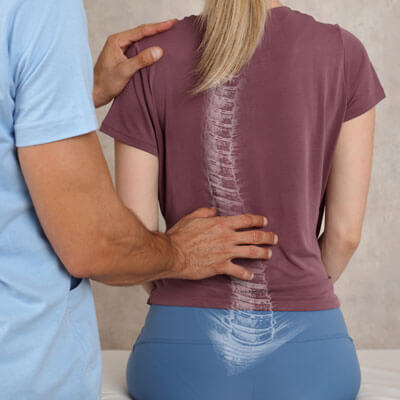
A herniated disc on an MRI doesn’t automatically explain a patient’s pain.
That’s an important distinction because disc abnormalities are relatively common, and the significance of a herniation depends on its location, the structures it affects, and whether those findings correspond with the patient’s symptoms and neurological examination.
A spinal disc has a tough outer portion surrounding a softer inner material. When the outer fibers become damaged, disc material can protrude or herniate beyond its normal boundary. If that change irritates or compresses a nearby spinal nerve root, symptoms may include localized back or neck pain, radiating pain into an arm or leg, numbness, tingling, or weakness.
But two patients with apparently similar disc findings on imaging can experience very different symptoms.
At Venn Chiropractic and Wellness Center in Frisco, TX, Dr. Jason Venn doesn’t determine treatment from the words “herniated disc” on an imaging report alone.
He looks at the complete clinical picture:
- Where are the patient’s symptoms?
- Do they follow a recognizable nerve pattern?
- Is numbness, tingling, or weakness present?
- What does neurological and orthopedic testing show?
- How is the affected area of the spine moving and functioning?
- Does the location of the disc problem actually correspond with the patient’s symptoms?
- Are there findings that suggest conservative care is appropriate—or findings that require additional medical evaluation?
Once those pieces are considered together, Dr. Venn can determine whether Gonstead chiropractic, spinal decompression, corrective rehabilitation, a combination of approaches, or another course of care makes the most sense.
For certain patients with a mechanical disc problem, Gonstead chiropractic and spinal decompression can complement one another because they are designed to address different components of the condition.
A Herniated Disc on an MRI Doesn’t Always Mean It’s Causing Your Symptoms
Finding a herniated or bulging disc on an MRI can sound alarming, but an imaging finding by itself doesn’t tell us how much of a patient’s pain is actually coming from that disc.
Disc abnormalities can sometimes be present without producing significant symptoms. That’s why Dr. Venn looks for correlation between the imaging, examination findings, and the patient’s symptoms.
For example, if an MRI shows a lumbar disc herniation affecting a particular nerve root, Dr. Venn wants to know whether the patient’s pain, numbness, tingling, weakness, reflex changes, or other neurological findings follow a pattern that makes sense for that nerve.
The opposite matters too.
A patient may have severe radiating leg pain, numbness, or weakness even when the language in an imaging report doesn’t sound particularly dramatic. The clinical examination can provide information that an imaging report alone cannot.
This is especially important because a patient may have several abnormalities on the same MRI. There may be disc bulges at multiple levels, degenerative changes, loss of disc height, spinal stenosis, or other findings. The challenge is determining which findings are clinically meaningful and most likely related to the symptoms.
At Venn Chiropractic, the goal isn’t simply to treat everything that looks abnormal on an image.
Dr. Venn considers the imaging alongside:
- The location and pattern of pain
- Numbness, tingling, or other sensory changes
- Muscle strength
- Reflexes and other neurological findings
- Orthopedic testing
- Spinal motion and mechanical findings
- Activities or positions that increase or decrease symptoms
- Previous injuries and treatment history
Putting those findings together helps determine whether the herniated disc is likely contributing to the patient’s problem—and, just as importantly, what type of treatment may be appropriate.
That’s the difference between finding a disc abnormality and determining whether that abnormality actually matters clinically.
When Spinal Decompression May Help With a Herniated Disc
When a herniated disc is believed to be contributing to nerve irritation, spinal decompression may be one part of the treatment plan.
Spinal decompression is not simply traditional traction, and its purpose isn’t to forcibly “pull a herniated disc back into place.”
The decompression system used at Venn Chiropractic applies controlled cycles of gradually increasing and releasing force to the targeted area of the spine. Dr. Venn often describes this to patients as working more like a gentle pump than a continuous pull.
Those repeated changes in force are intended to reduce mechanical loading on the affected spinal structures and create a more favorable environment for fluid movement within the disc.
For a patient with a herniated disc, the goals may include:
- Reducing mechanical stress around the affected disc
- Reducing irritation around nearby nerve structures
- Encouraging fluid movement within the disc through repeated loading and unloading
- Improving tolerance for movement and normal activities as symptoms improve
But the presence of a herniated disc doesn’t automatically make someone a candidate for decompression.
Dr. Venn considers the location and severity of the disc problem, neurological findings, symptom pattern, spinal mechanics, imaging, overall health, and previous treatment history before recommending it.
This becomes particularly important when a patient has weakness or significant neurological symptoms. Progressive weakness, changes in bowel or bladder function, saddle-area numbness, or other concerning findings may require prompt medical evaluation rather than beginning a decompression program.
For an appropriate candidate, however, decompression gives Dr. Venn a way to address the disc-related mechanical component of the problem.
And that’s only one part of the equation.
The Role of Gonstead Chiropractic in a Herniated Disc Case
A herniated disc and spinal joint dysfunction can exist at the same time, but they are not the same problem.
That’s why Gonstead chiropractic and spinal decompression serve different purposes within a treatment plan.
Using the Gonstead System, Dr. Jason Venn evaluates individual spinal segments for evidence of abnormal or restricted joint motion and other findings that may be contributing to the patient’s overall mechanical problem.
The evaluation can include motion and static palpation, neurological and orthopedic testing, postural and structural assessment, and digital X-rays when clinically appropriate.
For a patient with a herniated disc, specificity becomes especially important.
Dr. Venn wants to know which spinal level is involved, how that area is moving, where the disc injury is located, which nerve structures may be affected, and whether an adjustment is appropriate based on the patient’s examination and imaging.
When a specific spinal joint is identified as dysfunctional and appropriate to adjust, the Gonstead approach allows Dr. Venn to carefully select the spinal level, contact point, and direction of the adjustment rather than routinely manipulating multiple areas of the spine.
The goal is to improve the mechanics of the involved spinal joint while taking the patient’s disc and neurological findings into consideration.
This also means that a Gonstead adjustment isn’t being used to simply “push the herniated disc back in.”
Instead, the adjustment addresses the joint-mechanics component identified during the examination, while spinal decompression may be used to address the mechanical environment surrounding the affected disc and nerve structures.
For some patients, one of these approaches may be appropriate without the other. For others, the examination indicates that addressing both components makes sense.
Why Gonstead and Decompression May Be Combined for a Herniated Disc
A herniated disc can be an important part of a patient’s condition without being the only mechanical problem present.
Dr. Venn may identify a disc abnormality that corresponds with the patient’s neurological symptoms while also finding specific joint dysfunction at or near the involved spinal level.
In those cases, Gonstead chiropractic and spinal decompression may be used together because each addresses a different component of the problem.
Spinal decompression is used to change the mechanical loading environment surrounding the affected disc and nerve structures.
Gonstead chiropractic is used to address specific spinal joint dysfunction identified during the examination.
Corrective rehabilitation, when appropriate, may address additional problems involving movement, stability, strength, or posture.
For example, imagine a patient with an L5-S1 disc herniation and right-sided symptoms extending through the leg into the foot. If the neurological examination supports involvement of a nerve at that level and Dr. Venn also identifies significant joint dysfunction in the same region, treating only one component may leave another mechanical factor unaddressed.
That doesn’t mean every patient with an L5-S1 herniation needs both treatments. The example illustrates why the individual findings matter more than the diagnosis alone.
Dr. Venn also monitors more than pain when determining whether the treatment strategy is working.
For a patient with a herniated disc and nerve involvement, meaningful changes may include:
- Radiating pain traveling less distance into the arm or leg
- Reduced numbness or tingling
- Improvement in muscle strength
- Changes in neurological examination findings
- Greater tolerance for sitting, standing, walking, or exercising
- Improved ability to perform normal work and daily activities
Those changes help determine whether care should continue as planned, be modified, or whether the patient’s condition needs to be reassessed.
The goal isn’t to apply as many treatments as possible. It’s to identify the mechanical and neurological components that appear clinically relevant and address them as specifically as possible.
Why Experience Matters With Herniated Disc and Nerve Cases
Dr. Jason Venn has practiced chiropractic in Frisco since 2000 and has more than 25 years of experience evaluating patients with spinal, disc, and nerve-related conditions.
That experience becomes particularly important when a case isn’t straightforward.
Some patients come to Venn Chiropractic with a recent disc injury and a clear pattern of symptoms. Others have multiple disc bulges, significant degeneration, spinal stenosis, or years of recurring pain. Many have already tried chiropractic care, physical therapy, medications, injections, or other treatments without the improvement they expected.
In those more complicated cases, the challenge is often determining which findings actually matter.
A patient may have abnormalities at several levels on an MRI, but only one corresponds with the neurological symptoms. Another may have severe degeneration on an X-ray while still retaining important movement at the affected spinal level. Someone else may have a significant-looking disc herniation that doesn’t correspond with the location or pattern of symptoms.
Dr. Venn’s approach is to put those pieces together.
He considers the patient’s history, symptom pattern, orthopedic and neurological findings, spinal mechanics, imaging when appropriate, and previous response to treatment before developing recommendations.
That may lead to specific Gonstead chiropractic care, spinal decompression, corrective rehabilitation, or a combination of approaches. It may also reveal findings that require additional medical evaluation rather than chiropractic treatment.
The goal is to determine as precisely as possible what appears to be causing the patient’s symptoms and what can reasonably be addressed with conservative care.
That diagnostic-first approach is especially important for patients with persistent radiating pain, numbness, tingling, weakness, or complicated disc problems who may have been told that their only remaining option is to simply live with the symptoms or pursue more invasive treatment.
Frequently Asked Questions About Herniated Discs
Can a Chiropractor Treat a Herniated Disc?
Chiropractic care may be appropriate for some patients with a herniated disc, but the presence of a herniation alone doesn’t determine whether someone should be adjusted.
Dr. Venn considers the location and severity of the disc problem, the patient’s symptoms, neurological and orthopedic findings, spinal mechanics, imaging, and other clinical factors.
When a specific spinal joint is identified as dysfunctional and appropriate to adjust, the Gonstead approach allows Dr. Venn to carefully select the spinal level, contact point, and direction of the adjustment while taking the disc and neurological findings into consideration.
Can Spinal Decompression Help a Herniated Disc?
Spinal decompression may be considered when a herniated disc appears to be contributing to a mechanical disc and nerve-related problem that is appropriate for conservative care.
Decompression isn’t intended to simply “pull the herniated disc back into place.” The treatment uses controlled cycles of increasing and releasing force to change the mechanical loading environment around the affected disc and nearby nerve structures.
Whether decompression is appropriate depends on the individual patient’s symptoms, examination findings, neurological status, imaging, and overall condition.
Does a Herniated Disc on an MRI Mean That’s What’s Causing My Pain?
Not necessarily.
Disc abnormalities can sometimes be present in people who don’t have symptoms. That’s why Dr. Venn doesn’t determine treatment from an MRI report alone.
The location of the disc finding should be compared with the patient’s pain pattern, numbness or tingling, muscle strength, reflexes, neurological findings, orthopedic testing, and spinal examination.
The more closely those findings correlate, the more useful the imaging becomes in understanding what may be causing the patient’s symptoms.
Can a Herniated Disc Cause Numbness, Tingling, or Weakness?
Yes. If a herniated disc irritates or compresses a spinal nerve root, symptoms can occur along the distribution of that nerve.
Depending on the location of the disc problem, a patient may experience radiating pain, numbness, tingling, altered sensation, or weakness in an arm or leg.
Weakness is particularly important to evaluate because it can indicate motor nerve involvement. New or progressive weakness warrants careful assessment, and in some cases additional medical evaluation may be necessary.
When Does a Herniated Disc Need Medical or Surgical Evaluation?
Many herniated discs can be managed without surgery, but some findings require additional medical evaluation.
Progressive or significant muscle weakness, changes in bowel or bladder function, numbness in the saddle or groin area, severe or worsening neurological deficits, significant trauma, or other concerning symptoms can change the urgency and type of care required.
Surgical evaluation may also be considered when neurological deficits are progressing or when significant symptoms persist despite appropriate conservative treatment.
The decision should be based on the patient’s complete clinical picture rather than the MRI finding alone.
A Herniated Disc Doesn’t Automatically Mean Surgery
Being diagnosed with a herniated disc can be concerning, particularly when pain is traveling into an arm or leg or when numbness, tingling, or weakness is present.
But the words “herniated disc” on an MRI don’t determine the next step by themselves.
The important questions are whether the disc finding corresponds with the patient’s symptoms, how the affected nerves are functioning, what the examination reveals about the surrounding spinal mechanics, and whether there are any findings that make conservative treatment inappropriate.
For some patients, those findings indicate that a non-surgical approach may be reasonable.
At Venn Chiropractic and Wellness Center, Dr. Jason Venn may use specific Gonstead chiropractic adjustments, spinal decompression, corrective rehabilitation, or a combination of approaches when the patient’s individual findings support them.
For other patients, the examination may indicate that additional imaging, medical evaluation, or surgical consultation is appropriate.
The goal isn’t to avoid surgery at all costs.
It’s to determine whether there is a mechanical spinal problem that can reasonably be addressed conservatively before making assumptions based on the MRI alone.
If you’ve been diagnosed with a herniated disc—or you’re experiencing radiating pain, numbness, tingling, or weakness—the first step is understanding what the disc finding actually means in relation to your symptoms.
Oct 11, 2025 at 2:09 AM
Great article! I've been dealing with a bad herniated disc in my lower back for years. I live in Frisco and so far haven't found help. I'll be calling your office on Monday!