
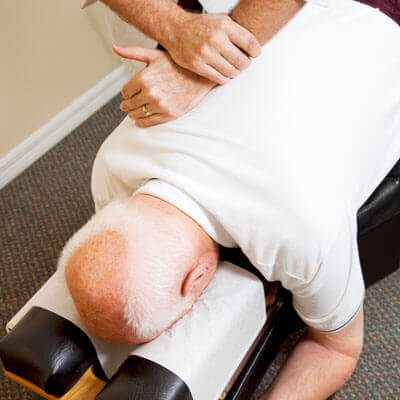
Sciatica and chronic low back pain can affect far more than your back. When symptoms travel into the buttock or leg—or include numbness, tingling, or weakness—the location of the symptoms doesn’t always tell us where the problem begins.
Sciatica refers to symptoms associated with irritation or compression involving the sciatic nerve or the spinal nerve roots that contribute to it. Those symptoms can have different causes. A herniated or bulging disc, degenerative changes, spinal stenosis, or other mechanical problems in the lower back may all produce similar patterns of leg pain.
That’s why simply knowing that someone “has sciatica” isn’t enough to determine the right treatment.
At Venn Chiropractic and Wellness Center in Frisco, Dr. Jason Venn begins by determining what is most likely contributing to the symptoms. The history, neurological and orthopedic examination, spinal assessment, and imaging when clinically appropriate are considered together before treatment recommendations are made.
For patients whose symptoms are associated with a mechanical spinal problem, that evaluation may identify joint dysfunction, herniated or bulging discs, disc-space changes, nerve-root irritation, or a combination of findings that can help guide treatment.
Why Gonstead Chiropractic Is Different
Not every chiropractic approach evaluates or adjusts the spine in the same way.
The Gonstead System is built around specificity. Rather than routinely adjusting multiple areas of the spine, the goal is to identify the particular spinal segments that show evidence of dysfunction and determine whether those findings correspond with the patient’s symptoms.
Dr. Jason Venn’s Gonstead evaluation combines the patient’s history with physical examination findings, motion and static palpation, postural and spinal assessment, and other clinical findings. Digital X-rays, when clinically appropriate, can provide additional information about spinal structure, alignment, disc-space changes, degeneration, and other factors that may influence how an adjustment is performed.
This becomes particularly important with patients who have sciatica or significant degenerative changes. Two people can both experience pain traveling down a leg while having very different underlying spinal findings. The adjustment that is appropriate for one patient may not be appropriate for the other.
When an adjustment is indicated, the Gonstead approach allows Dr. Venn to be highly specific about the spinal level being addressed, the direction of correction, and how the adjustment is delivered.
With more than 25 years of clinical experience, Dr. Venn has used this approach to evaluate and care for patients ranging from relatively straightforward mechanical back problems to complicated disc, nerve, and degenerative spinal conditions.
Why We May Combine Gonstead Chiropractic With Spinal Decompression
A chiropractic adjustment and spinal decompression are not interchangeable. They address different mechanical aspects of a patient’s condition, which is why Dr. Venn may recommend using them together in certain disc and nerve-related cases.
Gonstead chiropractic focuses on identifying and specifically adjusting spinal joints that are not moving or functioning properly. Spinal decompression is directed more toward the mechanical environment surrounding the discs and affected nerve structures.
And spinal decompression is not simply traction.
Traditional traction generally applies a pulling force to the spine. Spinal decompression uses controlled cycles of gradually increasing and releasing force. An easy way to picture the difference is to think of a gentle pump rather than a continuous pull.
During those repeated cycles, the goal is to reduce mechanical loading on the affected spinal structures and create a more favorable environment for fluid movement within the disc.
This can be particularly relevant when an evaluation identifies findings such as a herniated or bulging disc, significant disc-space narrowing, degenerative disc changes, or nerve-root irritation that corresponds with the patient’s symptoms.
For some patients, a specific Gonstead adjustment may be the primary treatment. For others, the examination and imaging findings may indicate that addressing both spinal joint mechanics and the disc environment makes sense. In those cases, Dr. Venn may incorporate spinal decompression alongside chiropractic care and corrective rehabilitation.
The important point is that decompression isn’t automatically added because someone has back pain or sciatica. It is recommended when the patient’s individual findings indicate that it may be appropriate.
When Sciatica or Low Back Pain Needs a More Detailed Evaluation
Some cases of back pain are relatively straightforward. Others are not.
A more detailed evaluation becomes especially important when symptoms have persisted despite previous treatment, when pain repeatedly returns, or when symptoms suggest that a nerve may be involved.
Patients often come to Venn Chiropractic with symptoms such as:
- Sciatica that travels through the buttock and down the leg
- Numbness or tingling in the leg or foot
- Pain associated with a known herniated or bulging disc
- Persistent low back pain that has not responded as expected to previous care
- Degenerative disc changes or spinal stenosis
- Symptoms that interfere with walking, exercising, working, sleeping, or normal daily activities
- Recurring problems despite previous chiropractic care, physical therapy, injections, medications, or other treatment
Previous treatment that didn’t work doesn’t necessarily tell us that conservative care has nothing left to offer. It may mean the underlying problem needs to be evaluated differently.
That’s particularly important with sciatica because similar symptoms can arise from different conditions. A patient with a lumbar disc herniation may require a different treatment strategy than someone whose symptoms are primarily associated with spinal stenosis, degenerative changes, joint dysfunction, or another source of nerve irritation.
Dr. Venn’s goal is to determine why the symptoms are occurring, which structures appear to be involved, and whether there is a mechanical problem that can reasonably be addressed with conservative care.
There are also cases where the findings indicate that chiropractic treatment is not the appropriate next step. Progressive neurological deficits, significant or worsening weakness, changes in bowel or bladder control, saddle-area numbness, or other concerning findings may require additional or urgent medical evaluation.
The ability to recognize both who may benefit from chiropractic care and who needs something different is an important part of evaluating complicated spine and nerve-related cases.
Experience Matters in Complex Spine and Sciatica Cases
Dr. Jason Venn has practiced chiropractic in Frisco since 2000. Over more than 25 years of clinical practice, he has evaluated patients with everything from relatively straightforward mechanical back pain to complicated disc, nerve, and degenerative spinal conditions.
That experience becomes particularly valuable when a patient doesn’t fit neatly into a simple diagnosis.
Someone may arrive with an MRI showing a disc herniation but have symptoms that don’t match the expected nerve pattern. Another patient may have significant degeneration on an X-ray but still retain movement in important areas of the spine. Someone else may have leg pain that sounds like sciatica but requires a closer examination to determine whether the lumbar spine is actually the primary source.
Those distinctions can change the treatment plan.
Dr. Venn’s approach combines more than 25 years of clinical experience with the specificity of the Gonstead System, detailed orthopedic and neurological examination, and digital X-rays when clinically appropriate.
For disc and nerve-related cases, spinal decompression and corrective rehabilitation may also be incorporated when the patient’s individual findings indicate they are appropriate.
The goal is not to fit every patient into the same treatment protocol. It’s to understand the patient’s symptoms, examination findings, spinal mechanics, imaging when necessary, and previous treatment history well enough to develop an individualized plan.
That approach has become especially important for patients who arrive at our Frisco office after months or years of persistent symptoms or after other treatment approaches have failed to provide the improvement they were hoping for.
Frequently Asked Questions About Sciatica and Low Back Pain
What Is the Most Common Cause of Sciatica?
Sciatica occurs when the sciatic nerve or one of the spinal nerve roots that contributes to it becomes irritated or compressed. Common causes include a herniated or bulging lumbar disc, degenerative changes, and spinal stenosis.
Because several different conditions can produce similar symptoms, determining the likely source of the nerve irritation is important before deciding on treatment.
Can a Chiropractor Help With Sciatica?
Chiropractic care may help when sciatica is associated with a mechanical problem in the lower back that is appropriate for conservative care.
At Venn Chiropractic, Dr. Jason Venn evaluates the patient’s symptoms, neurological and orthopedic findings, spinal mechanics, and imaging when clinically appropriate. If specific spinal joint dysfunction is contributing to the problem, Gonstead chiropractic adjustments may be incorporated into treatment.
For some disc-related cases, spinal decompression or corrective rehabilitation may also be recommended.
Is Spinal Decompression the Same as Traction?
No. While both involve applying force to the spine, the way that force is delivered is different.
Traditional traction generally applies a pulling force. Spinal decompression uses controlled cycles of gradually increasing and releasing force. We often describe this to patients as more like a gentle pumping action rather than simply pulling and holding the spine.
The goal is to reduce mechanical loading on affected spinal structures and create a more favorable environment for fluid movement within the disc.
Can a Herniated Disc Cause Sciatica?
Yes. A lumbar disc herniation can irritate or compress a spinal nerve root that contributes to the sciatic nerve.
Depending on which nerve root is affected, symptoms may include lower back pain, pain traveling through the buttock and leg, numbness, tingling, or weakness.
However, a disc abnormality on an MRI or X-ray doesn’t automatically prove that it is responsible for a patient’s symptoms. Imaging findings need to be considered alongside the examination and the pattern of symptoms.
What if I’ve Already Tried Treatment for Sciatica and It Didn’t Work?
Previous treatment that didn’t provide lasting improvement doesn’t necessarily mean that every conservative option has been exhausted.
One of the first questions we ask is why the previous treatment didn’t work. The original diagnosis may need to be reconsidered, the primary pain generator may not have been identified, or a patient may have multiple contributing problems requiring a different approach.
Dr. Venn frequently evaluates patients who have already tried chiropractic care, physical therapy, injections, medications, or other treatments. The goal is to reassess the problem rather than simply repeat the same treatment.
At the same time, some findings require additional medical or surgical evaluation. Progressive weakness, bowel or bladder changes, saddle-area numbness, or other concerning neurological findings should be evaluated promptly.
Finding the Right Approach for Sciatica and Low Back Pain
Sciatica can be painful, limiting, and frustrating—especially when you’ve already tried treatment and the symptoms keep returning.
But persistent symptoms don’t automatically mean that every patient needs the same treatment.
The first step is determining what is actually contributing to the problem. Is a herniated or bulging disc irritating a nerve root? Are degenerative changes or spinal stenosis reducing available space around the nerves? Is spinal joint dysfunction contributing to the mechanical stress? Or is there another condition that needs to be considered?
At Venn Chiropractic and Wellness Center, Dr. Jason Venn evaluates those factors before recommending care.
When the findings indicate that a mechanical spinal problem is appropriate for conservative treatment, care may include specific Gonstead chiropractic adjustments, spinal decompression, corrective rehabilitation, or a combination based on the patient’s individual needs.
For patients who have been dealing with persistent sciatica or low back pain—particularly those who have already tried other approaches—a detailed evaluation can help determine what options may still be available.