
Scoliosis Treatment in Frisco TX
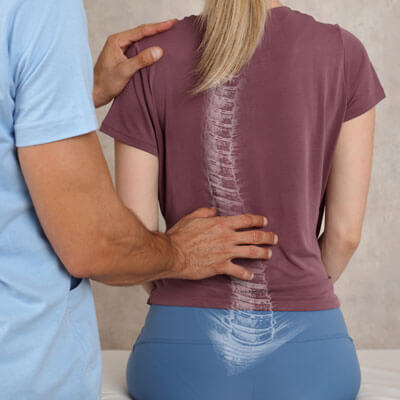
Scoliosis is an abnormal sideways curvature of the spine that also involves rotation of the vertebrae. It can range from a relatively small curve that requires monitoring to a more significant spinal deformity that may require specialized medical management.
At Venn Chiropractic and Wellness Center in Frisco, Dr. Jason Venn evaluates children, teenagers, and adults with scoliosis to understand the location and severity of the curve, how the spine is functioning, whether symptoms are present, and whether chiropractic care may have an appropriate role.
Not every scoliosis curve is the same, and the size of the curve alone does not tell the entire story. Age, skeletal maturity, progression, spinal mechanics, symptoms, and the patient’s overall clinical picture all matter when determining the appropriate approach.
The most common form in children and teenagers is adolescent idiopathic scoliosis, meaning the exact cause is unknown. Other forms include congenital scoliosis, which results from differences in spinal development before birth, and neuromuscular scoliosis associated with conditions affecting the muscles or nervous system. Adults may also have scoliosis that began earlier in life or develop degenerative scoliosis as age-related changes affect the spine.
Dr. Venn’s goal is first to determine what type of spinal problem is present and what can realistically be addressed through conservative chiropractic care.
What Are the Signs of Scoliosis?
Scoliosis is sometimes first noticed by a parent, during a school or sports physical, or when changes in posture become more apparent during growth.
Possible signs may include:
- One shoulder appearing higher than the other
- One shoulder blade appearing more prominent
- Uneven waist or hip height
- The body appearing to shift or lean to one side
- One side of the rib cage becoming more prominent when bending forward
- Clothing hanging unevenly
- Visible asymmetry of the spine or torso
Some people with scoliosis also experience back pain, muscle fatigue, stiffness, or discomfort, while others—particularly children and adolescents with smaller curves—may have few or no symptoms.
Postural asymmetry does not automatically mean someone has structural scoliosis. A clinical examination can help determine whether the asymmetry appears to come from posture, muscular imbalance, leg-length or pelvic mechanics, or an actual spinal curvature that warrants further evaluation.
When scoliosis is suspected, digital X-rays may be appropriate to evaluate the spinal curve, vertebral positioning, and other structural findings that cannot be determined from posture alone.
Can Scoliosis Get Worse Over Time?
Some scoliosis curves remain relatively stable, while others can progress. One of the most important factors is how much skeletal growth remains, which is why scoliosis identified in a growing child or teenager deserves appropriate evaluation and monitoring.
Doctors commonly measure scoliosis on an X-ray using the Cobb angle, which describes the degree of spinal curvature. The Cobb angle, the patient’s age and skeletal maturity, the location and pattern of the curve, and whether the curve is changing over time can all help determine the risk of progression.
Smaller curves may simply require periodic monitoring. When a curve reaches certain thresholds in a child who is still growing, bracing may be recommended to help reduce the risk of further progression. More severe or significantly progressing curves may require evaluation by an orthopedic or scoliosis specialist, and surgery may be considered in selected cases.
Dr. Venn does not view chiropractic care as a replacement for appropriate scoliosis monitoring, bracing, or surgical consultation when those are clinically indicated.
For patients receiving chiropractic care, the goal is to determine what aspects of spinal mechanics, mobility, posture, muscular balance, and symptoms may be appropriately addressed while continuing to monitor the scoliosis itself when necessary.
How Does Dr. Venn Approach Scoliosis?
Dr. Venn does not approach scoliosis by simply adjusting every area of the spine that appears curved. His goal is to identify the specific spinal joints and mechanical findings that appear abnormal and determine which areas should—and should not—be adjusted.
Using the Gonstead System of chiropractic, Dr. Venn carefully evaluates the spine and considers the patient’s symptoms, posture, spinal mechanics, and examination findings. When clinically appropriate, digital X-rays can provide additional information about the spinal curve, vertebral positioning, spinal structure, and other findings that may influence how care is approached.
Specificity is particularly important in a spine with scoliosis. Dr. Venn’s approach is to address the spinal joints he believes require treatment while avoiding unnecessary adjustments to areas that do not demonstrate findings indicating they need to be adjusted.
Depending on the individual patient, care may also include spinal rehabilitation with exercises designed to address relevant mobility, strength, stability, posture, or muscular imbalances.
The goals of care depend on the patient. For someone experiencing pain or stiffness, improvement may be measured by changes in symptoms, movement, and function. In a growing patient with scoliosis, the spinal curve may also require continued monitoring regardless of whether symptoms improve.
Chiropractic care does not eliminate the need to monitor a structural scoliosis curve, and Dr. Venn does not assume that feeling better means the scoliosis itself has been corrected.
Scoliosis in Children, Teenagers, and Adults
Scoliosis can affect patients at very different stages of life, and the goals of evaluation and care may differ depending on age, skeletal maturity, symptoms, and the type of scoliosis present.
Scoliosis in Children and Teenagers
When scoliosis develops in a child or teenager who is still growing, one of the primary concerns is whether the curve may progress as growth continues.
A child with scoliosis may have no pain at all, which is why visible changes such as uneven shoulders, rib prominence, or asymmetry of the waist or hips can be important clues.
Dr. Venn evaluates the child’s spinal mechanics and clinical findings while recognizing that structural scoliosis may require continued monitoring by the appropriate healthcare providers as the child grows.
For younger patients, you can also learn more about Dr. Venn’s approach to pediatric chiropractic care.
Scoliosis in Adults
Adults with scoliosis may have a curve that developed earlier in life or scoliosis associated with degenerative changes that occur over time.
For many adults, the reason they seek care is not simply the appearance of the curve. They may be experiencing back pain, stiffness, reduced mobility, muscle fatigue, or symptoms associated with other spinal conditions.
In these cases, Dr. Venn evaluates the scoliosis along with other findings that may be contributing to the patient’s symptoms. Conditions such as degenerative disc disease or spinal stenosis may sometimes coexist with adult scoliosis and need to be considered separately when determining the appropriate treatment approach.
The presence of scoliosis does not automatically mean that every symptom a patient experiences is caused by the spinal curve. Identifying what is actually contributing to the patient’s complaint is an important part of determining the appropriate care.
How Does Dr. Venn Measure Progress?
Progress with scoliosis should be evaluated according to the reason the patient is receiving care and the findings identified during the initial examination.
Depending on the patient, Dr. Venn may look for changes such as:
- Reduced back pain, stiffness, or muscle fatigue
- Improved spinal or joint mobility
- Better tolerance for sitting, standing, walking, exercise, sports, or other activities
- Improvements in strength, stability, posture, or movement when those areas are being addressed through rehabilitation
- Changes in the specific mechanical findings being treated
- Reduced interference with work, school, sleep, or everyday activities
Improvement in pain or function does not automatically mean that the scoliosis curve itself has changed. When determining whether a structural spinal curve has actually changed, comparison of appropriately taken spinal X-rays and objective measurements such as the Cobb angle may be necessary.
This distinction is important. A patient can experience meaningful improvement in pain, movement, or function even if the measured scoliosis curve remains relatively unchanged. Likewise, a patient who feels well may still require appropriate monitoring if there is concern about curve progression.
Dr. Venn uses the patient’s response to care, examination findings, and objective information when appropriate to determine whether the treatment plan should continue, change, or whether additional evaluation is needed.
Frequently Asked Questions
What is scoliosis?
Scoliosis is an abnormal sideways curvature of the spine that also involves rotation of the vertebrae. It is generally identified and measured using spinal X-rays, with the degree of curvature commonly described using the Cobb angle.
Scoliosis can occur in children, teenagers, and adults, and the appropriate approach depends on factors such as the type and size of the curve, age, skeletal maturity, symptoms, and whether the curve is progressing.
Is scoliosis the same as poor posture?
No. Poor posture can make the body appear asymmetrical, but structural scoliosis involves an actual three-dimensional curvature and rotation of the spine.
This is one reason an examination—and digital X-rays when clinically appropriate—can be important when scoliosis is suspected.
Can chiropractic care help scoliosis?
Chiropractic care may help some patients with symptoms, restricted spinal mechanics, mobility, posture, or other functional problems associated with scoliosis.
Dr. Venn uses a specific Gonstead chiropractic approach to identify which spinal joints appear to require treatment rather than automatically adjusting the entire spine.
Chiropractic care does not replace appropriate monitoring, bracing, orthopedic evaluation, or surgical consultation when those are indicated.
Can chiropractic adjustments straighten scoliosis?
Dr. Venn does not promise that chiropractic adjustments will straighten or eliminate a structural scoliosis curve.
His approach is to identify and address specific mechanical problems within the spine while monitoring the patient’s symptoms and function. If determining whether the structural curve itself has changed is clinically important, objective measurements from appropriately taken spinal X-rays are needed rather than relying on appearance or symptom improvement alone.
Why doesn’t Dr. Venn adjust every part of a scoliosis spine?
Dr. Venn believes specificity is particularly important when treating a spine with scoliosis. He carefully evaluates the spine so that treatment can be directed toward joints demonstrating findings that indicate they should be addressed while avoiding unnecessary adjustments to areas that do not.
The goal is not to make the entire spine feel loose. It is to make specific treatment decisions based on what Dr. Venn finds during the examination.
Does every child with scoliosis need treatment?
No. Some smaller scoliosis curves may only require observation and periodic monitoring, particularly when there is a low risk of progression.
The appropriate approach depends on the size and pattern of the curve, the child’s age, skeletal maturity, remaining growth, symptoms, and whether the curve is changing over time. When appropriate, Dr. Venn can work alongside the other healthcare professionals involved in monitoring or managing the child’s scoliosis.
Can adults receive chiropractic care for scoliosis?
Yes. Adults with scoliosis may seek chiropractic care because of back pain, stiffness, reduced mobility, muscle fatigue, or other musculoskeletal symptoms.
Dr. Venn evaluates the scoliosis along with other possible sources of the patient’s symptoms. In adults, conditions such as degenerative disc disease or spinal stenosis may coexist with scoliosis and may also need to be considered.
Does Dr. Venn use exercises for scoliosis?
When appropriate, exercises may be incorporated through spinal rehabilitation to address specific findings involving mobility, strength, stability, posture, or muscular imbalance.
Exercise recommendations are based on the individual patient rather than assuming that everyone with scoliosis needs the same exercises.
A Scoliosis Patient’s Experience
One teenage patient Dr. Venn treated came to Venn Chiropractic after being diagnosed with scoliosis. She was experiencing recurring back pain and discomfort that interfered with her daily activities and her ability to participate comfortably in dance.
During her evaluation, Dr. Venn assessed her scoliosis, spinal mechanics, posture, and movement to determine which areas appeared relevant to her condition and symptoms.
Her care included specific chiropractic adjustments directed toward the findings identified during her examination along with exercises intended to address relevant muscular and postural imbalances.
Over the following weeks, she reported a significant reduction in back pain and improved comfort with her daily activities and dance.
Over the course of her care, follow-up spinal X-rays also documented a change in her measured scoliosis curve from 27 degrees to 15 degrees. This provided an objective structural finding in addition to the improvements she was experiencing in pain and function.
Dr. Venn continued to evaluate her progress using her symptoms, function, examination findings, and spinal imaging rather than relying on any one measure alone.
This was an individual patient outcome and does not mean that every scoliosis curve will improve with chiropractic care. Results vary according to the type and severity of scoliosis, age, skeletal maturity, and other individual clinical factors.
Schedule a Scoliosis Evaluation in Frisco
If you or your child has been diagnosed with scoliosis—or you’ve noticed uneven shoulders, spinal curvature, postural asymmetry, or recurring back discomfort—the first step is understanding what is actually happening with the spine.
At Venn Chiropractic and Wellness Center, Dr. Jason Venn evaluates scoliosis along with spinal mechanics, symptoms, function, and other relevant clinical findings. Digital X-rays may also be used when clinically appropriate to evaluate the curve, vertebral positioning, and spinal structure.
The goal is to determine what type of scoliosis is present, whether chiropractic care may have an appropriate role, and whether monitoring or evaluation by another healthcare provider should also be considered.
Contact our Frisco chiropractic office to schedule an evaluation with Dr. Venn.
Reviewed by Dr. Jason Venn, DC
Doctor of Chiropractic | 25+ Years of Clinical Experience
This page has been reviewed by Dr. Jason Venn for clinical accuracy and reflects his experience evaluating and treating children, teenagers, and adults with scoliosis and related spinal conditions.
Venn Chiropractic and Wellness Center | Frisco, TX
