
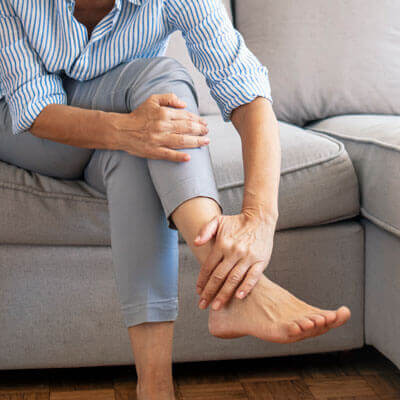
What Should You Do—and Avoid—When You Have Sciatica?
When sciatica is painful, one of the hardest questions can be surprisingly simple:
What should you actually do during the day?
Should you rest or keep moving? Is walking helpful? Should you stretch? Is sitting making things worse? And how do you know whether an activity is helping your recovery or irritating the nerve further?
The answer is not the same for everyone.
Sciatica describes pain and other symptoms associated with irritation of the sciatic nerve or the nerve roots that contribute to it. Symptoms may include pain through the buttock and leg, burning, tingling, numbness, or weakness. But those symptoms can have different underlying causes, including a herniated or bulging disc, degenerative changes, or spinal stenosis.
That matters because an activity that feels helpful for one person with sciatica may aggravate another person’s symptoms.
Rather than following a universal list of “best sciatica exercises,” it is useful to pay attention to how your particular symptoms respond to movement, positions, and daily activities.
Should You Rest or Keep Moving With Sciatica?
When every step hurts, avoiding movement can seem like the safest option.
A short period of modifying activities may be reasonable when symptoms are particularly irritated, but prolonged bed rest generally isn’t the goal. Remaining completely inactive can make it harder to maintain normal mobility, strength, and tolerance for everyday activity.
Instead, think in terms of relative rest.
That means reducing or temporarily avoiding activities that clearly aggravate your symptoms while continuing tolerable movement when possible.
For one person, that might mean taking several short walks instead of one long walk. Someone else may need to change how long they sit before getting up and moving. A person whose job involves lifting may need to temporarily modify those activities.
The key is not simply whether an activity causes any sensation.
Pay attention to what happens to the overall symptom pattern.
If an activity repeatedly causes pain to travel farther down the leg, substantially increases numbness or tingling, produces new weakness, or leaves symptoms significantly worse afterward, that may be a reason to stop and have the situation evaluated.
On the other hand, being able to gradually perform more normal activity without worsening neurological symptoms can be one useful sign of improving function.
The goal is not to become afraid of movement.
It is to find the appropriate amount and type of movement for your particular presentation while the irritated area recovers.
Is Walking Good for Sciatica?
Walking can be a useful form of movement for many people with sciatica, but whether it feels good depends partly on what is contributing to the symptoms.
For some people, a comfortable walk helps reduce stiffness and makes the back and leg feel better as they get moving. For others, walking for too long may increase leg pain, numbness, tingling, or weakness.
This is particularly important because different conditions can behave differently.
Someone with a herniated disc may have a different response to walking and standing than someone with spinal stenosis. A person with stenosis, for example, may notice increasing leg symptoms with prolonged standing or walking and improvement after sitting or bending forward.
Instead of assuming that more walking is always better, start with an amount you can comfortably tolerate and pay attention to how your symptoms respond during the walk and afterward.
Several shorter walks throughout the day may be better tolerated than trying to complete one long walk while symptoms are irritated.
As you improve, walking time and distance can often be gradually increased based on your response.
Can Sitting Make Sciatica Worse?
For some people, yes.
Prolonged sitting can aggravate certain types of sciatica, particularly when remaining in one position causes symptoms to increase or travel farther into the leg.
That does not mean there is one perfect sitting posture that everyone with sciatica needs to maintain all day.
Instead, avoid becoming locked into the same position for long periods. If you work at a desk, drive frequently, or spend significant time sitting, changing positions and taking regular movement breaks may be more useful than trying to hold a rigid “perfect” posture for hours.
Pay attention to your own symptom pattern.
If sitting consistently increases pain, tingling, or numbness down the leg, consider shortening the amount of time you remain seated before standing or changing position.
If your symptoms improve when you sit—as can occur with some presentations of spinal stenosis—that information is also important.
The objective is not to label sitting as universally good or bad. It is to identify whether prolonged sitting is one of your symptom triggers and adjust accordingly.
Should You Stretch When You Have Sciatica?
This is one area where generic advice can cause problems.
People with sciatica are frequently told to stretch their hamstrings, lower back, piriformis, or even the sciatic nerve itself. But feeling tight does not necessarily mean that a structure needs to be stretched aggressively.
When a nerve or nerve root is already irritated, certain stretches may increase tension on sensitive neural tissue and make symptoms worse rather than better.
That doesn’t mean stretching is always inappropriate. It means the right exercise depends on what is producing the symptoms and how your body responds to a particular movement.
Be especially cautious about repeatedly forcing a stretch that causes pain, burning, tingling, or numbness to travel farther down the leg.
A rehabilitation program should be based on the patient’s individual findings rather than simply prescribing the same collection of “sciatica stretches” to everyone.
As symptoms improve, appropriate mobility, stabilization, and strengthening exercises can be progressed based on the individual’s needs and tolerance.
What About Lifting When You Have Sciatica?
Lifting is not automatically off-limits when you have sciatica, but this is usually not the time to repeatedly test movements that clearly reproduce or intensify your leg symptoms.
Pay attention to both the amount of weight and how your symptoms respond to the movement.
When lifting, keeping the object reasonably close to your body and avoiding sudden, uncontrolled twisting can reduce unnecessary stress. If possible, break heavier loads into smaller ones or ask for assistance while symptoms are particularly irritated.
But technique alone does not make every lift appropriate.
If bending or lifting repeatedly causes pain, burning, tingling, or numbness to travel farther down the leg, or produces a feeling of weakness or instability, continuing to push through the activity may not be appropriate.
As symptoms improve, lifting can often be gradually reintroduced as part of a spinal rehabilitation program based on the individual’s strength, mobility, and response to activity.
How Should You Sleep With Sciatica?
There is no single sleeping position that is best for everyone with sciatica.
The most useful position is generally one that allows you to rest without substantially increasing your leg symptoms.
Some people are more comfortable sleeping on their side with a pillow between their knees. Others prefer lying on their back with support beneath the knees. These positions may change how the lower back and hips are loaded, but neither should be considered a universal treatment for sciatica.
Use your symptoms as a guide.
If a particular position consistently increases radiating pain, numbness, or tingling, try changing positions or modifying the support provided by your pillows.
Also remember that nighttime pain deserves context. Difficulty getting comfortable because certain positions aggravate an already-irritated area is different from severe, unexplained, or progressively worsening pain at rest.
If pain is persistent, worsening, or accompanied by other concerning symptoms, it should be evaluated rather than simply managed by experimenting with sleeping positions.
What Should You Do at Work When You Have Sciatica?
For many patients, the challenge is not a particular exercise. It is spending eight or more hours each day in positions or activities that continually aggravate their symptoms.
If you work at a desk, avoid assuming that finding one “perfect” posture means you should remain there all day. Changing positions periodically, standing when appropriate, and taking brief movement breaks can help you avoid spending hours in one position that aggravates your symptoms.
If your job requires driving, lifting, bending, or repetitive physical work, temporary modifications may be necessary depending on the severity and cause of your symptoms.
The same principle applies regardless of the job:
Your workday should not repeatedly provoke progressively worsening neurological symptoms.
Increasing numbness, tingling, weakness, or pain traveling farther down the leg deserves more attention than ordinary muscular fatigue or temporary stiffness.
The objective is to keep you as functional as reasonably possible while avoiding repeated aggravation of an irritated nerve and gradually restoring your tolerance for normal activity.
What Exercises Should You Avoid With Sciatica?
There is no universal list of exercises that every person with sciatica needs to avoid.
The more useful question is whether a particular exercise is improving, maintaining, or aggravating your specific symptom pattern.
An exercise deserves caution if it repeatedly causes:
- Pain to travel farther down the buttock or leg
- Increased numbness or tingling
- New or increasing weakness
- A substantial increase in symptoms that persists after the exercise
- Loss of control or stability during the movement
This is one reason generic online lists of “best exercises for sciatica” can be misleading. Two people can both describe their problem as sciatica while having different underlying causes and responding very differently to the same movement.
Exercise selection should also change as recovery progresses. A movement that is poorly tolerated during an acute episode may become appropriate later as symptoms settle and strength and mobility improve.
The objective of spinal rehabilitation is not simply to give every patient the same set of exercises. It is to progressively restore mobility, stability, strength, and normal function based on the individual’s findings and response.
How Do You Know if an Activity Is Making Sciatica Worse?
Pain intensity is useful information, but it is not the only thing to watch.
One of the most useful observations is where the symptoms are going.
For example, if an activity repeatedly causes symptoms that were primarily around the buttock or upper leg to begin traveling farther down the leg toward the calf or foot, that change may be important.
The opposite pattern can also occur during recovery. Some patients notice that symptoms extending into the lower leg become less frequent or retreat toward the buttock or lower back as they improve. This is sometimes described as centralization.
However, symptom location is only one part of the picture.
Changes in numbness, tingling, strength, walking tolerance, sitting tolerance, sleep, and the ability to perform normal activities can all provide useful information about how someone is progressing.
Rather than repeatedly pushing through an activity simply because you have been told it is “good for sciatica,” pay attention to what your symptoms are telling you before, during, and after the activity.
When Should Sciatica Be Evaluated Instead of Managed at Home?
Mild symptoms sometimes improve with activity modification and time, but sciatica should not always be treated as something to simply stretch or wait out.
An evaluation becomes more important when symptoms are severe, persistent, repeatedly returning, or interfering substantially with walking, sleeping, working, or normal daily activities.
Seek prompt medical evaluation for new or progressive leg weakness, significant changes in sensation, or rapidly worsening symptoms.
Certain symptoms require urgent medical attention, including new loss of bowel or bladder control or numbness in the saddle region around the groin and inner thighs. These can be associated with serious nerve compression and should not be managed at home.
The purpose of an evaluation is not simply to confirm that someone has “sciatica.” It is to determine what may be irritating the nerve and whether the clinical findings suggest conservative care is appropriate or additional medical evaluation is needed.
What Actually Helps Sciatica Recover?
There is no single treatment or lifestyle change that is appropriate for every person with sciatica.
The first priority is understanding what appears to be causing or contributing to the nerve irritation.
At Venn Chiropractic and Wellness Center, that begins with the history and examination. Dr. Venn looks at where the symptoms travel, what positions or activities change them, strength and neurological findings when relevant, spinal mechanics, and imaging when appropriate.
That information helps determine whether conservative treatment makes sense and what role different types of care may have.
For some patients, Gonstead chiropractic care may be used when specific mechanical findings in the spine appear relevant to the clinical picture.
For selected patients with disc-related problems, spinal decompression may also be considered.
Spinal decompression is different from simply placing the spine under a continuous stretch. The treatment uses controlled cycles of distraction and relaxation that Dr. Venn describes as creating a gentle pumping effect.
These changing forces are intended to repeatedly reduce and release mechanical pressure in the treated area rather than maintaining one continuous pulling force. Whether decompression is appropriate depends on the patient’s diagnosis, examination findings, and other clinical considerations.
As symptoms improve, spinal rehabilitation may be used to progressively restore mobility, stability, strength, and tolerance for normal activities.
Not every patient needs all three approaches.
The purpose of the evaluation is to determine which components of care, if any, are appropriate for the individual rather than automatically combining treatments simply because someone has sciatica.
Lifestyle Changes Should Support the Treatment Plan—Not Replace the Diagnosis
Walking, changing sitting habits, modifying lifting, improving sleep positions, and performing appropriate exercises can all play a role in managing daily life with sciatica.
But lifestyle changes work best when they are based on an understanding of the problem rather than used as a substitute for determining what is causing persistent symptoms.
Someone with a disc-related problem may respond differently to certain positions and movements than someone with spinal stenosis. Someone experiencing progressive weakness requires a different level of attention than someone whose mild symptoms are steadily improving.
That is why the goal should not be to find the perfect universal sciatica routine.
The better approach is to understand the likely cause, reduce activities that repeatedly aggravate the nerve, maintain tolerable movement when appropriate, and gradually restore normal function as symptoms allow.
The Goal Is to Get Back to Normal Activity
Long-term recovery should not require spending your life avoiding normal movement because you are afraid the sciatica will return.
During an irritated phase, temporary modifications may be appropriate. As symptoms improve, however, the goal is generally to progressively restore the activities that matter to you.
That may include sitting comfortably through a workday, walking farther, returning to exercise, lifting safely, sleeping without persistent leg symptoms, or participating in sports and hobbies again.
Recovery is not simply about making today’s pain score lower.
It is about restoring function and confidence while addressing the clinical findings that may be contributing to the problem.
Frequently Asked Questions About Daily Life With Sciatica
Is It Better to Sit or Walk With Sciatica?
Neither sitting nor walking is universally better for everyone with sciatica.
Some people find that prolonged sitting aggravates their leg symptoms and feel better when they get up and move. Others—particularly some people with spinal stenosis—may notice increasing symptoms with prolonged standing or walking and improvement when they sit or bend forward.
Rather than forcing yourself to sit or walk because one has been labeled “better for sciatica,” pay attention to how your symptoms respond and change positions before they become significantly aggravated.
Should I Push Through Sciatica Pain?
You do not necessarily need to stop an activity because you notice mild discomfort, but repeatedly pushing through worsening neurological symptoms is different.
Pay particular attention if an activity causes pain to travel progressively farther down the leg, increases numbness or tingling, produces new or increasing weakness, or leaves your symptoms substantially worse afterward.
Those changes may indicate that the activity needs to be modified and the condition evaluated.
Is Bed Rest Good for Sciatica?
Prolonged bed rest generally is not the goal for uncomplicated sciatica.
When symptoms are highly irritated, temporarily reducing aggravating activities may be appropriate. However, this is better thought of as relative rest rather than complete inactivity.
Maintaining tolerable movement and gradually returning to normal activities can help preserve mobility, strength, and function as symptoms improve.
Should I Stretch My Hamstrings if I Have Sciatica?
Not automatically.
Hamstring tightness and sciatic nerve irritation can sometimes feel similar, and aggressively stretching an irritated nerve may increase symptoms in some people.
If a hamstring stretch repeatedly causes burning, tingling, numbness, or pain to travel farther down the leg, stop forcing the stretch.
Exercise and mobility recommendations should be based on the individual’s presentation rather than assuming everyone with sciatica needs the same stretches.
Is Walking Every Day Good for Sciatica?
Walking may be useful if it is well tolerated, but there is no required distance or amount of time that everyone with sciatica should walk.
If a long walk aggravates your symptoms, several shorter periods of comfortable movement may be more appropriate. Walking time and distance can then be gradually increased as your tolerance improves.
If walking consistently produces increasing leg symptoms, numbness, weakness, or a substantial reduction in how far you can walk, an evaluation may help determine why.
Can I Exercise at the Gym With Sciatica?
Possibly, but your normal workout may need to be temporarily modified.
Whether a particular exercise is appropriate depends on what appears to be contributing to the sciatica, the severity of the symptoms, and how you respond to the movement.
Instead of assuming that all exercise is dangerous—or that you should push through your normal program—temporarily modify movements that clearly aggravate your neurological symptoms and progressively restore activity as you improve.
What Is the Best Exercise for Sciatica?
There is no single exercise that is best for every person with sciatica.
Sciatica can result from different underlying problems, and two people with similar leg symptoms may respond very differently to the same exercise.
The appropriate exercise program should account for the suspected cause, examination findings, current symptoms, functional limitations, and how the patient responds as exercises are progressed.
How Do I Know if My Sciatica Is Getting Better?
Improvement can involve more than simply having less pain.
You may notice that symptoms occur less frequently, travel less distance down the leg, interfere less with sleep, or allow you to sit, walk, work, and exercise for longer periods.
For a more detailed explanation of recovery patterns and what changes may mean, read How Long Does Sciatica Last? Signs You’re Improving.
Managing Sciatica Starts With Understanding the Cause
There are useful things you can do during a sciatica episode: remain appropriately active, modify movements or positions that consistently aggravate symptoms, avoid blindly forcing stretches or exercises, and gradually restore normal activity as your tolerance improves.
But those strategies do not replace understanding why the nerve is irritated in the first place.
At Venn Chiropractic and Wellness Center in Frisco, Dr. Jason Venn evaluates the patient’s history, symptom pattern, examination findings, neurological findings when relevant, and imaging when appropriate before determining whether conservative treatment may be appropriate.
The objective is not to give every patient the same sciatica routine.
It is to understand the individual presentation and develop a plan that helps the patient safely work toward normal function again.
Not Sure What You Should Be Doing for Your Sciatica?
If sciatica is interfering with your walking, sitting, sleeping, work, or normal activities, an evaluation can help determine what may be contributing to the symptoms and what next steps may be appropriate.